this weekend's paper towel

You might think me insane, but hear me out. I've mentioned it before. Our family has not purchased or used paper towels for nearly three years. Before making this change, I would watch my boys splash their hands with water, consider it a thorough wash job, then rip off half a dozen paper towels, delighting in how fast the roll pirouetted around the holder.

One day we ran out of paper towels, and I didn't feel like going to the store. We had to make do with cloth kitchen towels to dry our hands and clean-up rags to, well...clean up! Guess what happened. We survived!

I didn't buy paper towels on my next shopping trip, and I announced to the family that we were going to try a challenge: one month without paper towels. I got some grief. Fast forward three years later, and it's second nature to the whole family. We don't buy paper towels.

Can you imagine how many trees we've saved? I'll have to give my boys most of the credit, there. Can you imagine how much money we've saved? I'm not one for facts and figures, but I'm guessing enough for a few evenings of family entertainment.

During this busy holiday weekend, I'm caring for quite a few critters. I wash my hands frequently: two to three times per visit, I'd say, depending on when the dog was last bathed or how dirty the litter box is. I can usually find a kitchen towel with which to dry my hands, but when I can't, sometimes I'm forced to use paper towels (not being the type to snoop in drawers).

At one client's home, this is this weekend's paper towel:

20130526-075346.jpg

I started caring for the pets on Friday afternoon, and at three visits per day... this baby has now been used at least a dozen times to dry my clean hands. When I'm finished with it, I just lay it out flat, like so, and it's all dry and ready to go again on my next visit.

It's the little changes that make a difference.

for the birds: nesting kindergartners

Have I mentioned how much I love my kids' school? Horizon Community Learning Center is a pre-K-12 charter school here in Ahwatukee (Phoenix) that we discovered for our eldest five years ago when he was entering the sixth grade. Porter started there this year for kindergarten. We love it in every way, and the project I witnessed today is a perfect example of why we feel that way.

Each quarter, the K-8th grade classes do in-depth studies on specific subjects or themes. They work on their studies every day of that quarter. This is called "project group." At the end of the quarter, the students present to family and friends what they have learned. It's always impressive, but to see these five- and six- year olds speak in front of a large group of mostly adults, sometimes with self-created props or a PowerPoint presentation goes beyond my comprehension. The kids are truly awesome and are that way because the team of teachers is phenomenal and the parents support the effort. As advertised, the school really is a community.

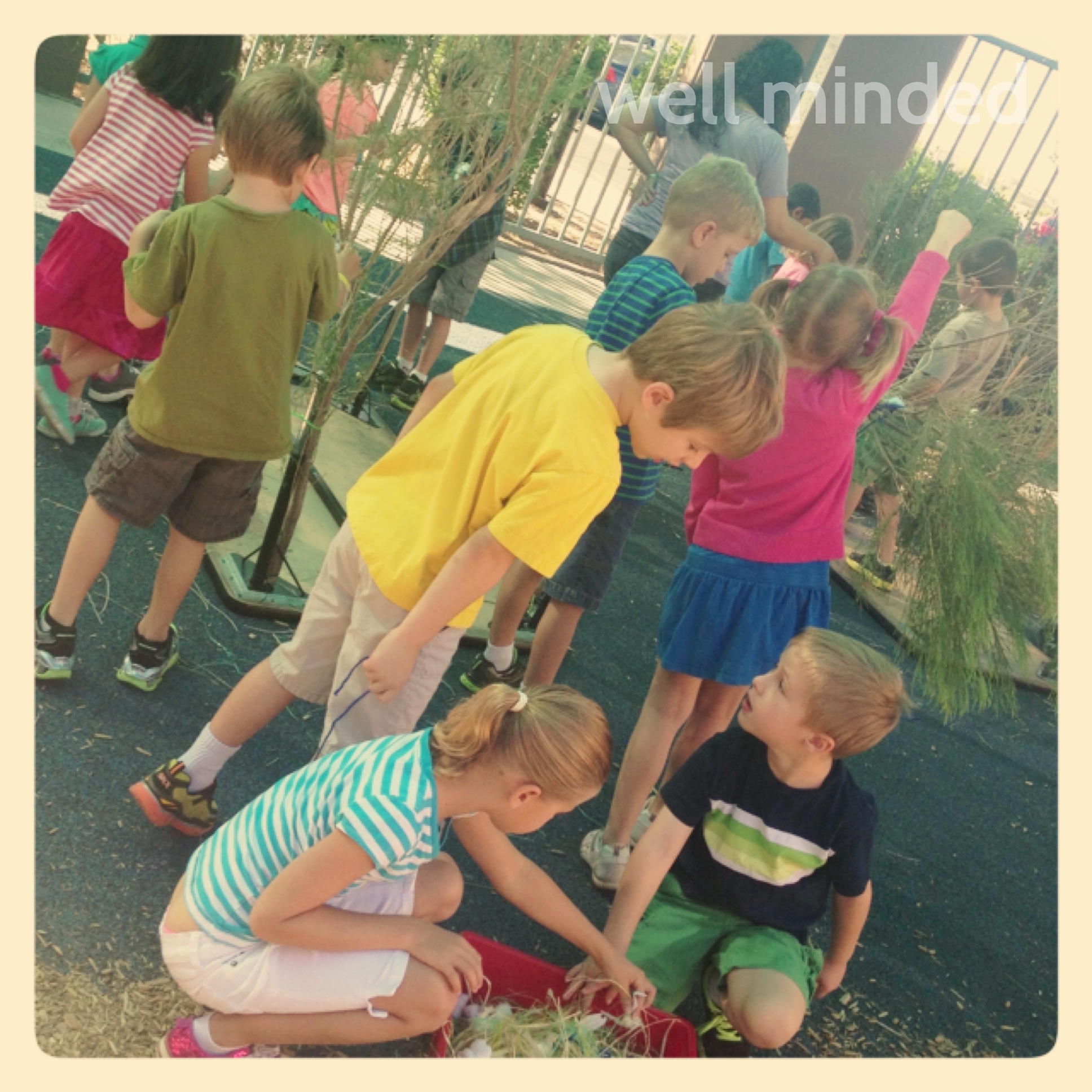
This quarter, the kindergartners are studying animal habitats with a special focus on birds, a subject I shared about several weeks ago. They have studied real bird skeletons and labeled all of the parts, then compared them to human skeletons. They dissected bird feathers. They used beak models created by the teachers so they could learn what types of beaks are beneficial (or not) in a given situation. They analyzed body coverings. Today, they built nests. In trees. Have I mentioned how much I love my kids' school?

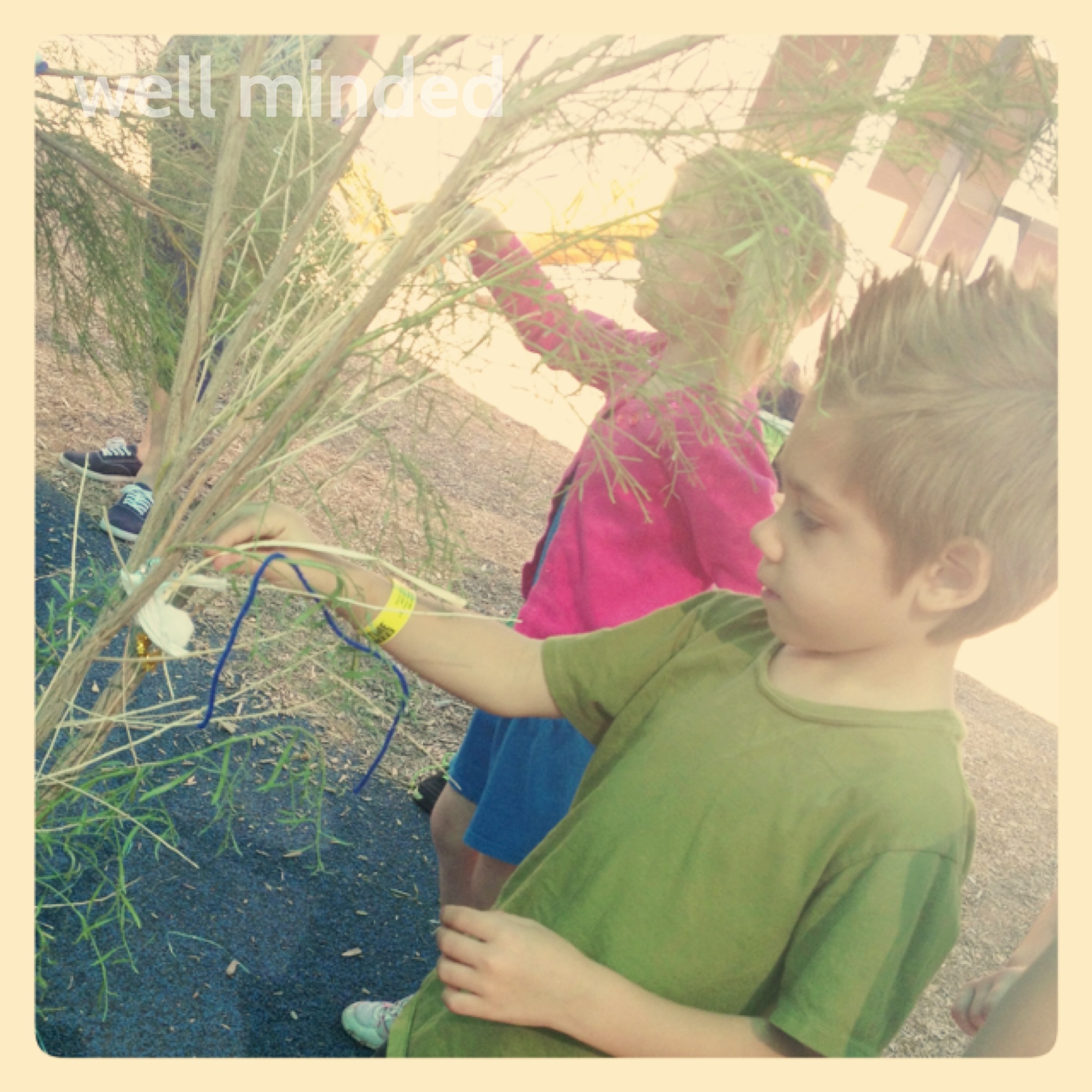
The kindergarten teachers assembled a "forest" of trees (large tree branches propped up on their ends and supported in some way incomprehensible to me). Porter's teacher (who we love beyond words) told me that the teachers were reported by someone for suspicious activity for poaching branches off city trees at 6:00 a.m....oh, what they do for the kids! Containers of nesting materials were placed nearby, and the students were divided up into groups, presumably bird families.

Image

Oh, but it wasn't that simple. Since birds only have one beak, the students could only use one hand to pick up, transport, and build with each piece of material they chose. Even if they knew how to tie their shoes, they couldn't use those skills. It would be an unfair advantage! The teacher caught them cheating a few times and made them remove what they'd done with two hands. Fantastic! I totally caught Porter cheating–not keeping his extra hand behind his back or in his pocket as suggested–but I kept my beak out of the bird business, not wanting to be a nagging hen.

Image

As if that wasn't enough, the teacher simulated wind by shaking the tree ever so slightly. Would the nest hold up? If not, it was back to the start.

I just happened upon this scene when I was at the school volunteering for another kindergarten program. It was lucky and timely, considering I just posted yesterday about the importance of exposing your children to animals at an early age.

There is just so much that this activity teaches the children: first-hand bird knowledge, engineering, teamwork, self control...the list goes on. Not to mention that it gets them up out of their chairs and in the real (protected kindergarten playground) world. And what I love most is that it teaches them empathy for birds. It really illustrates for them in a hands-on way how hard it is to build a nest and how much work goes into it. I'll bet they think twice next time they have an opportunity to nail a bird nest with a baseball.

Original content by well minded word

kids and animals: instilling respect

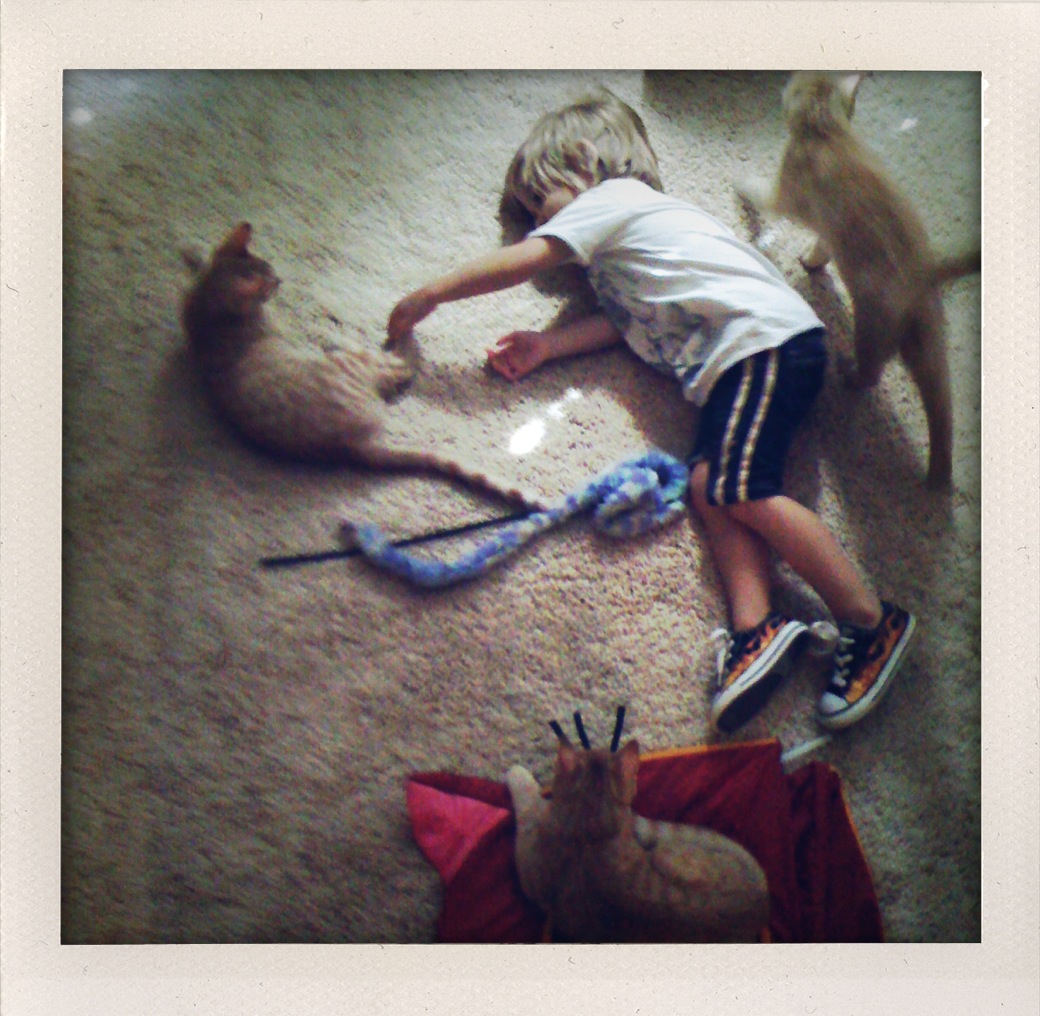
My children have been junior pet sitters at Well Minded since before they knew they were junior pet sitters, traveling with me to care for all kinds of animals from typical house pets to reptiles, to farm animals. In addition to teaching them that our clients' homes are to be respected in every way, I have taught them how to treat animals and how to be safe around them. At ages six and four, my children can read animal language better than most, so I feel confident and secure in their ability to practice self control and gentle love. Even so, the most important rule for children and animals is to never leave them alone with an animal, especially if that animal is unfamiliar to them. I must confess that I do leave my children alone with our animals–a risk I am willing to take since I feel that I can trust all parties. Both animals and children are unpredictable, however, so I realize that there is always a chance something could go wrong. I never leave my children alone with a client's pet, both for the safety of the pet and my children.

Teaching children how to behave in various animal encounters is not only important for their safety, but also for the animal's safety.

You obviously don't want your child to pull a tail or hit an animal–these things should be easy to teach, unless your child has a bit of Lucifer inside, in which case, it's best so steer clear of animals until an exorcism can be performed. Assuming your child's soul is pure with delightful intentions, here are a few suggestions:

• I recommend exposing your child to animals at an early age, if only just to observe. The more your child sees animals, the more comfortable and familiar they will be with animals. And I don't just mean picture books. Make sure your child is comfortable around all family pets, and vice-versa. Take your baby to the zoo and talk about the animals. Take opportunities to interact with friends' pets.

• Talk to your child about how the animals feel in a given situation. Jumping next to a napping cat may produce a reaction in the cat that is hilarious to the child, but the cat has been startled and will most likely steer clear of the child in the future, breaking a possible bond. Explain that the cat feels scared and startled. Most children are born with a natural compassion for animals. If that tendency is fostered, it is easy for a child to respect an animal's feelings and space.

• Model good behavior around animals, and explain what you are doing, even if it seems mundane. "This dog likes it when I pet him from the top of his head to the middle of his back. He doesn't like his nose touched. I'm going to pet him the way he likes it so that we can be great friends."

• No matter the situation, children need to be calm around animals. Unless it's a game of fetch in the backyard with the family dog, keeping a calm, confident energy around all animals is important. Animals pick up on human energy in an instant and are often leery around children making erratic movements, squealing, or being careless. Kids will be kids, and I don't want to take all the fun out of being around an animal, but if treated with respect and care, an animal will show you it's best side, which is much more fun for everyone.

• Teach your children how to restrain themselves around animals. All kids want to do is touch and pet and love, with the best of intentions, but some animals can be shy or standoffish, or even scared. Pushing the animal to interact is a big mistake. I teach my children to be calm and ignore a barking dog. I teach them not to chase a cat who wants privacy. And with enough practice, they have grown to restrain themselves on their own.

• Learn about and teach your children animal language, even if it's just the basics. What does a cat's hiss mean? Why is the dog's hair standing on end? Why did the tortoise pull into his shell? All of these are warning signs and children should be taught to recognize them.

Children and animals go together like pb & j. Foster your child's natural curiosity. If you take every opportunity early on, your kids will grow to love animals and treat them with the respect they deserve.
Image

Original content by well minded word.

our sidekick, "barf bowl"

The single best thing about working from home as a professional pet sitter is that I get to be with my kids. That's only a problem when one of them is sick, because I can't call in sick to play nurse for the day. Porter woke up at precisely 4:43 a.m. this morning, barfing his brains out. No school. Instead, he gets to go to work with mommy. Thankfully, this mostly means we get to cuddle on the couch while I work away on the laptop, but today we had to venture out to see a few animals. The poor guy didn't want to go at all, and asked if I could call someone to take care of him, but with such short notice, that just wasn't a possibility. So we ventured out with our sidekick, "barf bowl" and completed our visits.

Oh, and if I saw your animal today, rest assured that he saved the actual barfing for when we were just blocks away from home.

Image

keeping the pups hydrated

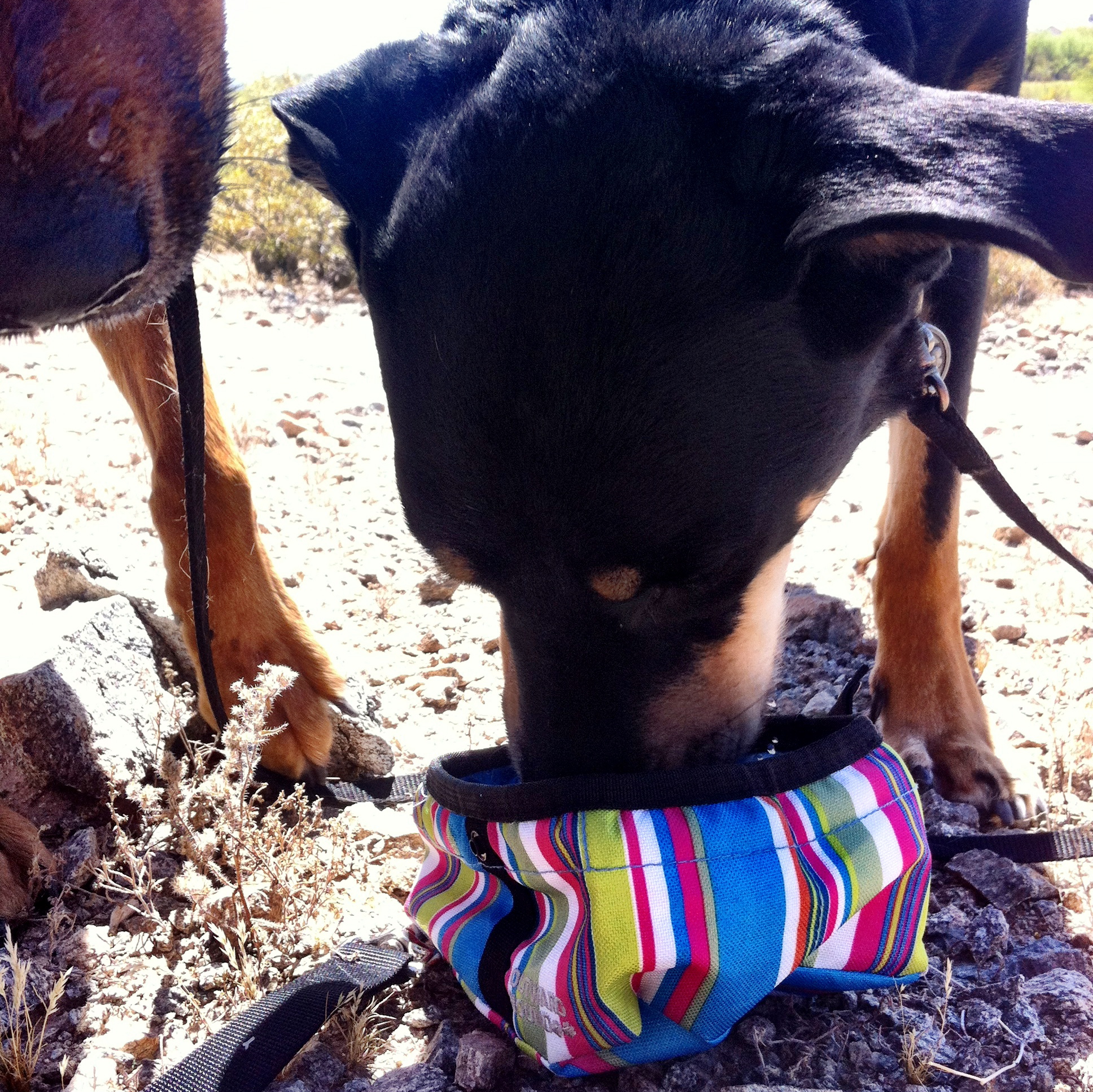
Temps are on the rise, especially here in Phoenix. Everyone in our family carries a water bottle everywhere, and it's just as important to keep our pooches from becoming dehydrated. I use a foldable bowl by Outward Hound. I love the convenience of the foldable bowl because it weighs next to nothing and folds down so small that I can easily fit it in my pocket or purse, and, of course, my hiking backpack for our family or Tails on Trails hikes. Though lightweight, the bowl can withstand a beating because it's made of heavy-duty canvas. Though the pups prefer it when I hold the water for them, catering to their every whim, our bowl has been in dirt and on rocks and the like countless times and doesn't look at all worse for the wear.

The bowls come in different sizes, but I got a fairly small one so that it would be most portable. It just means that sometimes the lager dogs ask for seconds, which I'm happy to provide.

The bowl was particularly helpful when we went to the Phoenix Pet Expo and our canine companion refused to drink out of the community dog bowls that were placed around the event. Who could blame her? I think the ratio of drool to water was off the charts.

I also love the collapsable, reusable bowls because they help us keep things green. Instead of using store-bought water bottles, we fill our reusable bottles and, in turn, refill the dog bowl. Again and again!

Cheers!

IMG_5337