

cow's milk or almond milk?
I grew up drinking and loving cow's milk. After breast feeding Porter and Campbell for eighteen and sixteen months, respectively, I happily transitioned them into a morning routine of cow's milk. My eldest (16), B, has long-loved a tall glass of the stuff with desert every evening. It has been in our lives, and it's a hard habit to shake. When my daughter, Campbell, now 4 1/2, first began breast feeding, the doctors suggested I supplement with formula because she wasn't thriving and she, in fact, was throwing up most of what I put in her. We determined that she had a dairy allergy, so any dairy I consumed was rejected by her body. Without passing judgement on those who choose formula for a variety of reasons, I was personally determined that no formula would enter the lips of my babies. And I knew I could make the sacrifices necessary to make that happen.
So I quit all dairy cold turkey, and I considered it an adventure. It was easy to give up dairy for my child, and it was fun to explore new options. I learned a lot, Campbell did better, and I discovered soy. I thought it a delicious miracle, and considered myself healthier for it. Soy has it's own issues, which I won't go into here, but suffice it to say that when I discovered those issues, I decided to take the next step in my journey. Enter almond milk.
Most of the milk I drink is part of my morning coffee. Soy in place of cow's milk was a creamy, delicious trade, and I felt healthier for it. Soy milk was sweeter than cow's milk, so I gave up sugar in my coffee. I stuck with it, even after Campbell gave up the breast. I just didn't enjoy cow's milk anymore, and it made my coffee taste rancid. The switch to almond milk was a harder sell for me. It just didn't seem as, well...milky. I tried rice milk and coconut milk and flax seed milk, which were even less satisfying. I finally settled on almond milk about a year ago, and I have since fallen in LOVE.
I have successfully converted my husband to enjoy almond milk in his morning coffee. On his cereal, he uses cow's milk and almond milk in equal proportion. With desert (taking it straight), he still succumbs to the cow.
B will drink whatever I put in front of him, but, as a teenager, he pretty much fends for himself most of the time. So when I pour him a glass, he'll happily drink almond milk. If left to his own devices, either because his brain cells have been sucked up by video games or because he likes it better or because he wants to spite me, or because his biological mother tells him I'm a hippy health freak, he'll pour himself an overflowing glass of cow's milk. Rebel.
The littles are now consistently drinking a 50/50 blend of almond milk and cow's milk. I gradually blended their cow's milk to reach that proportion, and they don't seem to notice it. But if I go a hair over 50% with the almond milk, it is promptly rejected, and fits are thrown. I'm struggling with just abolishing cow's milk altogether, or attempting to keep up the transition. They love their milk so. And I love beer. Best not to go cold turkey on either, for now. There might be fits.
I only purchase organic whole (less processed) cow's milk, so we're using the best of the worst, and I bake and cook with almond milk when milk is required. There we are.
So the ongoing saga of mind over matter and ethics and the spell of dairy in our lives continues...
This graphic that Allison's Gourmet posted is a fantastic summary of why almond milk is a much better choice for animals, the environment, and health: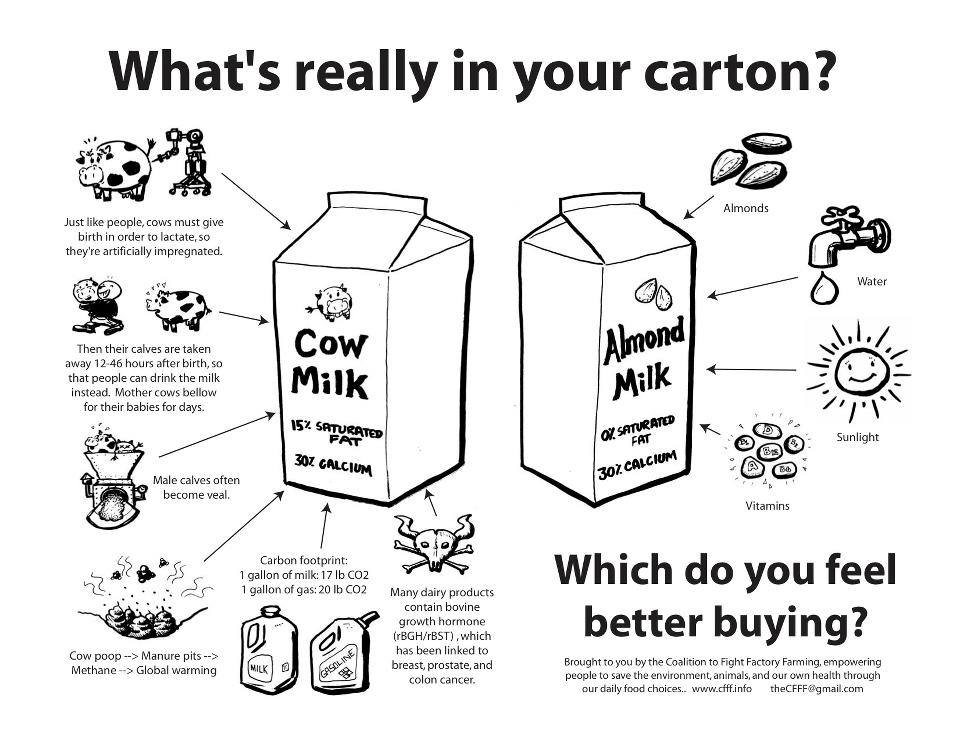
I'd love to hear why you choose the milk you do.
for keeps: Blog the Change for Animals
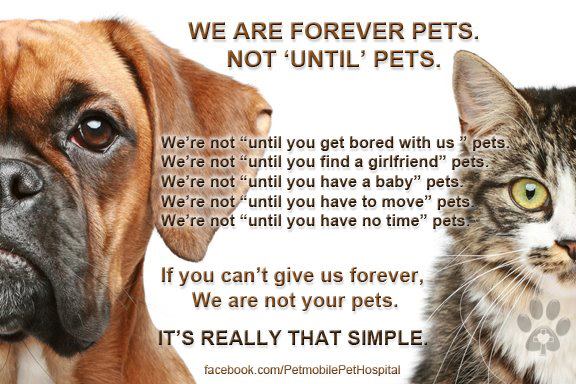
There are so many animals out there in need of homes, and so many who are destroyed as a result. So it goes without saying that unless you need a particular breed of animal pet for a specific reason, adoption is the best option. Regardless of the means by which a pet joins a family, the most important factor is that the family knows what they are getting into. A pet is a member of a family, not an armchair that can be replaced if the leg is busted or the upholstery is worn. Pets are in it for the long haul. If they are sick, they must be cared for–not discarded. If a family moves, it needs to seek out a pet-friendly option in a new home, not dump the animal at a shelter. And if your pet urinates around the house, it's time for behavior training, not the streets. We all have our issues, right?
Before getting a pet, think about the following:
1. What will this pet add to the family?
2. What care is involved with this pet?
3. Will this pet be good around children (if applicable)? And will the children be able to help care for the pet?
4. How long is the pet expected to live, and are there any health concerns surrounding this type of pet?
5. How much time is our family willing to put into training?
6. What are the potential issues with the specific pet we are considering adding to our family?
7. Who will care for the pet?
8. Can we afford to care for this pet?
9. Does our family's activity level and presence in the home fit with the needs of the pet?
10. Is our family ready to make a commitment to care for the pet for the duration of it's life?
It's wonderful that there are no-kill options for families who are in over their heads, but if research is done before a pet enters the family, there is a better chance that that pet will be a perfect, livelong fit, as it should be. Bringing a pet into the family is a commitment for the life of the pet, period. Pets are for keeps.
Support others blogging the change for animals today:
Powered by Linky Tools
Click here to enter your link and view this Linky Tools list...
debating the hunt with Greg (part 2): the ethical hunter

I've been speaking to my brother-in-law, Greg, about his avid hunting for years, and I've written about it before. Although I'm now aiming at a vegan lifestyle, I've eaten his kills in the past with delight, as long as I didn't have to see their faces. Yes, I was that kind of meat eater. A crispy, tender breast is not nearly as lovable as the duck from which it comes.
That is becoming more difficult for me to swallow. I had a conversation with Greg about the hunter and the hunt. Since Greg most often hunts water fowl and upland game birds, we focused on that.
WM: Greg, I know that you are an "ethical hunter." That will sound like an oxymoron to a lot of our readers.
Greg: Well, first off, let me say that a good ethical hunter does not take game for the sake or thrill of the kill, and they only take what they need or will use. I think that water fowl and upland game birds are delicious–a delicacy–so I always eat what I kill.
WM: So the meat doesn't go to waste for the sake of a studly picture, and you're not hanging them on your wall. How much do the animals suffer?
Greg: Not every shot is a good clean kill. There are times when you might only break a wing or create an injury that renders the bird flightless. When a bird is recovered that is not dead, a quick ring of the neck is usually what is done to kill the bird.
WM: Ugh.
Greg: With that said, practicing good ethical hunting can greatly decrease the amount of crippled birds. A good ethical hunter knows the distance and range that is lethal and will only take shots within that range, which results in more clean kills.
WM: So less suffering?
Greg: Yes, and the use of a well-trained dog greatly increases the amount of game recovered.
WM: So a crippled bird isn't left to suffer in a bush?
Greg: Exactly. There is no doubt that you are killing an animal, and some people will never be able to look past that. For me, it is something I have been able to look past, as a hunter.
WM: You often talk about how hunters benefit the population of animals they kill, as a whole. Will you please explain that?
Greg: Hunters do more for wildlife conservation, preservation, and habitat restoration than any other group. It is the revenue, donations, and volunteer hours from hunters that have attributed to the success of organizations such as Ducks Unlimited and Pheasants Forever, as well as state and federal game regulatory agencies.
WM: So how does this help the animals?
Greg: Simply put, if you were to remove hunters out of the equation, you would see a rapid decline in wildlife populations, habitat, and funding. It is the revenue generated from hunting that allows many of the wildlife organizations to exist. Many manufactures of hunting equipment direct percentages of revenues to support various wildlife organizations. In some instances, 100% of state and federal funding comes from the sale of hunting licenses of species specific tags.
WM: Isn't this all a bit self-serving in the name of conservation? I mean, the greater the population of animals, the more there is to hunt, right?
Greg: We, as hunters, are advocates for the well-being and long term health of the species we hunt. We do not do this with the hopes of killing more animals. It is to ensure the animals' survival and the protection of the habitat needed to support a healthy population.
WM: So there is thought given to the natural balance of things?
Greg: As humans, we have corrupted the natural ecosystem and destroyed millions of acres of habitat through development, farming, and pollution. It is our responsibility as hunters to restore the habitats needed to support healthy populations of wildlife, and it is our role as hunters to keep populations at a level that the available habitat will support. Different states and regions will set game limits accordingly. If it were not for hunters, some species would literally overpopulate and destroy their own habitat and run the risk of spreading diseases that could threaten the long term survival of the species.
WM: So hunters are actually helping maintain a balance between habitat and population.
Greg: Ducks Unlimited explains it well:
Ducks Unlimited is the world's leader in wetlands and waterfowl conservation.
DU got its start in 1837 during the Dust Bowl when North America's drought-plagued waterfowl populations had plunged to unprecedented lows. Determined not to sit idly by as the continents waterfowl dwindled beyond recovery, a small group of sportsmen joined together to form an organization that became known as Ducks Unlimited. Its mission: habitat conservation.
WM: Thank you for speaking about this, Greg.
Greg is able to take what I tend to see simply as an lighthearted, thoughtless slaughtering of innocent animals and raise in me a greater appreciation for the ethical hunter. I may not be able to accept it, but at least I can better understand it.
It does raise other questions for me, however. Though the "ethical hunter" seems to be doing his part to give back, what percentage of hunters are ethical? And if you're not an "ethical hunter," what category do you fall into, and what does that look like?
Do you have any questions for Greg?
Ultra Oil for Pets
I used to think supplements unnecessary. I make sure my family eats healthy, nutritious food, so why should we need anything more? I learned that due to the depletion of minerals in our soil, the foods we thought were so nutrient-rich–and should be–sadly, are not. Even whole, organic, natural foods don't pack quite enough punch. So I put my family on the best supplements I could find with maximum absorption. The whole family takes multivitamin & minerals, calcium, and omega-3s, and us oldsters also take joint supplements so we don't get all crotchety when we try to run around.
But what about N.A.S.H.A., our dog? She just turned eight, yet still acts like a puppy. Would she need to supplement, too? I feed her the highest-quality food. But then, taking what I know into consideration...she'd probably need to get on board with the rest of the family.
I discovered Ultra Oil, a skin and coat supplement, a balanced source of omegas for pets. Ultra Oil is designed to compensate for the deficiencies found in our pets' foods. It is heart-healthy and helps with immunity and overall organ function as well as itchiness and skin dryness.

Although N.A.S.H.A. is healthy overall, she has that wiry fur that easily tangles, and she has seasonal allergies that cause her to lick and chew her paws at various times of the year (like, now), depending on what's in the air and on the ground. Since pets absorb everything they step on through their paws, it's easy to understand why it's common for pets to pay so much negative attention to them.

Tony Klabunde from Ultra Oil describes the supplement:
Ultra Oil gives you everything you need from a fish oil supplement with the omega-rich, low mercury sardine & anchovy, but we don't stop there. We add hempseed oil (nature's most balanced source of omegas) along with flaxseed and grapeseed oil. This allows for the complete profile of healthy fats, including omega 9s, in the right balance to be optimally absorbed. We believe this is why our supplement is so much more effective at healing allergic breakouts, itching, and hot spots that fish oil alone just can't touch. After people see the effectiveness of this balance on even the most serious skin irritations, they keep coming back, but the #1 thing that causes people to originally switch from fish oils is the fact that Ultra Oil doesn't have that stinky odor.
And, it's true! I really stuck my nose in there, and the stuff has no odor whatsoever. N.A.S.H.A. is a super picky eater, so I thought for sure she'd reject her altered regular food when I put the Ultra Oil on it, but I have seen no change in her eating habits whatsoever, so she either likes it or doesn't notice it. Based on her weight, all she needs is one pump per day. Administration instructions are on the bottle, so you'll know how much your pet needs.
After being on Ultra Oil for a month, now, I have noticed a reduction in the amount of time N.A.S.H.A. spends tending to her paws. There is an occasional lick, but, for the most part, the Ultra Oil has alleviated her allergic reactions. Though her fur isn't like that of a mink, and she'll always be prone to dreadlocks, it seems softer to me and tangles less.
I love the fact that Ultra Oil is non GMO and completely human grade. The farmers from which they source their seed oil use sustainable farming practices. So I can feel good about giving it to my pet.
Though we've seen some benefits in N.A.S.H.A., I'd love to see first hand how the stuff works on a dog with extreme allergies and hot spots. Stay tuned for future reviews!
Ultra Oil is available for individual use and wholesale applications.
Disclaimer: I was provided Ultra Oil in exchange for my honest opinion.