the big, bad world: enter, ThunderShirt, part 2 (Jack)

After learning how great the ThunderShirt worked for Rex, I had to see for myself. Since my own pooch is anxiety-free unless a butterfly tries to invade the garden, I recruited a helper. My mother-in-law has one of the most anxious dogs I know. Jack is a four-year-old Queensland Heeler/Short-haired Pointer mix with a difficult past. After being abandoned in a shelter as a pup, he was adopted and abused. He found a new, safer, happier home, but his high energy became a problem for another dog in the house who was suffering with health issues. In addition, gardeners at a neighboring home would tease him with their blowers through an open fence. It just wasn't a good fit.

Jack finally found his forever home with Tena, who has given him both loving comfort and solid training. She's spent hours with him in obedience school and has discovered that he's quite brainy. He passed with flying colors. But, like Rex, though Jack can behave, he still suffers from anxiety.

Tena explained,

"Jack is the most loyal, loving, wonderful house dog I have ever had, but his frantic running back and forth along my fence line with incessant, loud barking every time a gardener is in the neighboring yard is a huge problem."

Since Tena's property borders a condo complex that requires a lot of maintenance, this gardening occurs four days a week. Soon after Jack arrived at his new home, neighbors started to complain. Tena knew something had to be done, both for the neighbors and for Jack. And for her own sanity.

[wpvideo Nqt5VhkR]

I suggested the ThunderShirt to Tena because I'd heard great things about it. She was skeptical, naturally, as anyone would be of a daughter-in-law who frequently comes up with hair-brained plans to save animals. Even after I had the ThunderShirt sent to her house, she was hesitant. "I was a doubter," she now admits. I finally convinced her to give it a shot. "To get Jack used to (the ThunderShirt), I put it next to his blanket on the couch and in the laundry basket with my clothes," she reported.
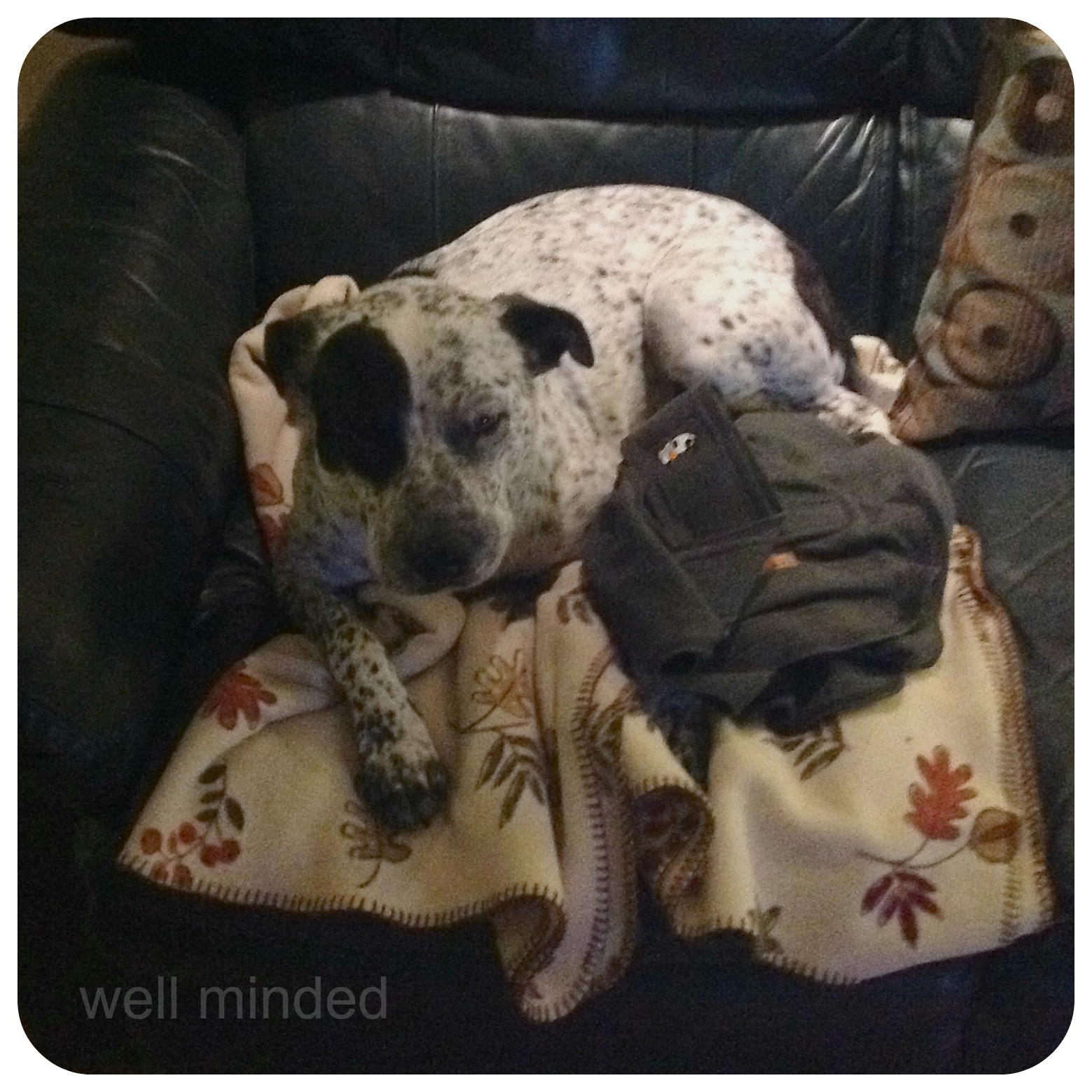
Jack meeting his new ThunderShirt. Photo supplied by Tena Carr.

Then it got real.

The next door neighbor began mowing his lawn, and Jack exploded into a barking rage. Tena managed to get Jack inside. She put on the ThunderShirt, admittedly too loose. Jack was so out of control that it was extremely difficult to get the shirt on. Still, "Jack immediately calmed down. He stopped panting and pacing and just laid down," Tena said.

[wpvideo yabPtCXL]

The next time the gardeners came, Tena did a better job of getting the ThunderShirt on, fitting it snugly, as instructed. Tena was amazed:

"Jack went to sleep! When he woke up, I let him outside, and the gardner was still working. Jack barked about two times, then came right back in. I am so impressed! I never thought there would be a solution to this problem."

Testing fate, the next time the gardeners came, Tena decided to put the shirt on Jack, then take it off a few minutes later. "He went back to panting and pacing!"

Tena plans to keep using the shirt in times of high-anxiety for Jack. I'm looking forward to hearing more about it, and now that I'm convinced that the ThunderShirt really works, I'm curious as to how it works. Stay tuned.

Bonus in all of this: Perhaps Tena will subscribe to more of my hair-brained schemes in the future.

Disclaimer: I received a complimentary ThunderShirt in exchange for my honest opinion.

keeping it small: size matters to me

When I started pet sitting full time, I initially tried any advertising I could think of. In order to build an initial client base, I threw lots of time and money down every conceivable avenue, only to receive very little in return. I learned quickly that networking and building relationships in the community was the fastest and best way to build my client base. Though we're always accepting new clients, we're now a manageable size, considering it's basically just myself and one other sitter. I prefer to keep it small because, well, let's be real: I'm a control freak. That, and I love the fact that I know each of my clients very well. They are almost like family. We partner with our clients to make sure their pets get the best care. Many of our clients have been with us since the beginning in 2005, and we're so grateful to have these relationships that often last through multiple "generations" of pets.

We now build our business primarily from client and community referrals, which is the best way to go for us. Just as our clients want to have the best pet sitter in all the land, we want to have the most awesome clients. By gaining new clients through referrals and spending time in the community, we can more readily trust that this will be the case, and they usually feel very comfortable knowing that a trusted source has said we're the best.

Image

Because we value referrals so highly, we offer our clients an ongoing, graduated referral reward that gets better each time the referred client uses our services. Our client who is kind enough to refer to us gets rewarded over and over! It's been a great success for us, and it's a good feeling to know that we can say thank you to those who spread the word about Well Minded.

Growing our business this way allows us to create a family bond with our clients. I love that when a client's name pops up on my phone, I know exactly who they are and who their pets are. Size does matter. And we prefer to keep it small.

debating the hunt with Greg (part 1): a different world

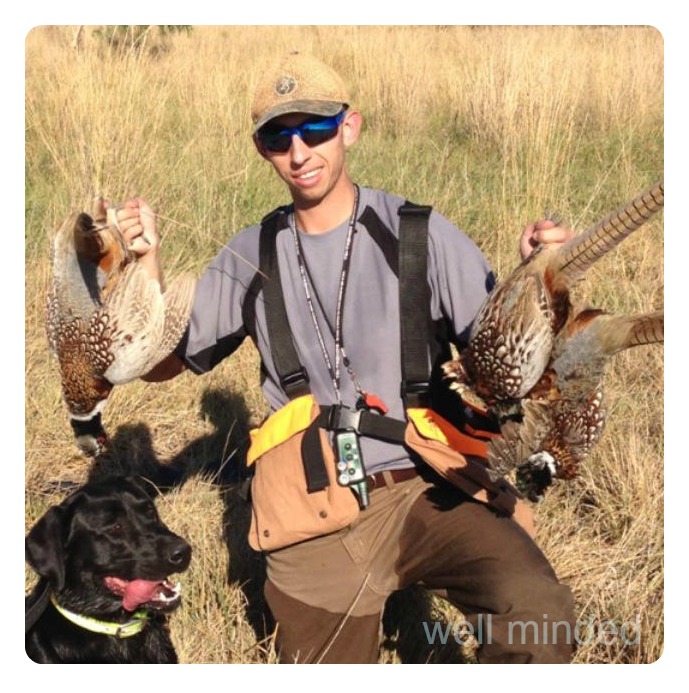
I pride myself on loving and accepting my family and friends, even if I don't agree with what they do. They extend me the same courtesy, and the result is that we can have educated respectful conversations about nearly anything, and we both come out smarter for it. I don't make public statements on social media about my leanings. I prefer to save those conversations for people (or blog followers) I can speak to "live," and not throw punches in the dark. Let me introduce you to my brother-in-law, Greg, who is an avid hunter and fisherman. Let me introduce you to Greg, whom I love and respect despite this fact. He is one of those people whom I have been able to have these intimate conversations with. You see, as a person heading toward a completely vegan lifestyle, and as a person who has never shot a gun and who has no desire to even catch-and-release, for fear I poked a bloody hole in the mouth of a sea-creature, and may have done psychological damage to said fish, I can't quite relate to Greg on this matter. With part a tone of conviction, and part solid facts and foundations, he has somehow presented to me on several occasions that hunting is okay–for him.

Image

I was a little girl who would order ciopinnio in a restaurant and bring most of it home in a doggie bag, only to attempt resuscitation and give freedom to the in-tact animals in a bowl of water once I got home. They received names. And then were promptly eaten by the cat as soon as I went to bed. Or perhaps they were fed to the cat...hmmm...

Greg and I are one and not the same.

I met my husband's brother when he was sixteen, early on in his hunting and fishing endeavors. He first became interested in waterfowl and upland game bird hunting during his sophomore year in high school. He did not come from this background (so hopefully genes have been spared), but was introduced to it by a schoolmate, Lorenzo. Having completed a hunter education class at the age of fifteen, Greg purchased his first State of California Hunting License. He continued to gain more knowledge and interest, then went on his first waterfowl hunt with Lorenzo and Lorenzo's father.

"After going on just one hunt, I knew this was something I wanted to do every season and would need the appropriate gear to do so (waders, decoys, gun, and dog)," Greg said. His parents allowed him to purchase his first shotgun at age seventeen, with money he saved from working. At the same time, Greg purchased (another point of contention that I understand but don't agree with) his first hunting dog, Ruger, a male black lab. As a high school graduation gift from his parents, Greg received a season-long duck blind lease.

Greg completed his first duck season with Ruger and "found a new appreciation for the sport after watching the dog (I had) trained perform in the field." Greg and Ruger continued to hunt successfully together until 2011, when Ruger developed a brain tumor, declined quickly, and had to be euthanized.

First hand, I know Ruger was not just a hunting dog, but an amazing companion for the whole family. We were all heartbroken when he succumbed to his tumor. My favorite memory of Ruger is when Greg left him in my care and I dressed him in a pink shirt and hair bow, took pictures, and gave one to Greg. It was my silent protest to their manly ways. Although Greg would dispute the fact, Ruger loved the temporary makeover.

I have to admit that although I may not agree with the actual hunting, what I've witnessed from Greg in terms of dog training is quite impressive. I can understand how training a dog to have restraint in the moment so as not to alert prey, then follow commands and retrieve and preserve the kill is something to be commended in terms of skill.

I asked Greg why he initially loved hunting:

"What sparked my interest about duck hunting, in particular, was that it was very challenging. First, you have to sound like a duck...some might think blowing a duck call is easy, (but) it takes years to master. A duck call is essentially a woodwind instrument that reacts to air pressure, the aperture of your mouth, and the movement of your tongue to create notes and tones that sound like a real duck. There is verbal communication between the hunter and the ducks. Being proficient at duck calling is a real talent.

I also fell in love with the fact that most duck hunting takes place early in the morning. Most hunters are in the duck blind well before the sun is up. You really get to experience nature wake up as the sun rises and everything begins to move about. I have always loved anything that involves being outdoors.

Once I acquired and trained my first hunting dog, Ruger, I was able to experience a whole new appreciation and passion for hunting. Watching your dog perform in the field is the equivalent of watching your children compete at sports. When they perform well, it makes you proud. It is amazing how much natural instinct and drive hunting dogs have. They LOVE to be out in the field hunting. Literally, they were bred for it. I can remember times when Ruger would see me loading up the truck the night before we were going hunting, and he would jump in the truck and refuse to get out. He did not want to get left behind."

It sounds so romantic when Greg describes it, I almost forget he's shooting down magnificent creatures. But then I snap back into my own reality and ask why. Why shoot animals? Why not skeet shooting? He explains,

"Skeet shooting is challenging in the aspect that it does take skill to hit a moving target, but it could never provide all of the tangible and intangible aspects hunting can provide. You could never learn to master the art of calling skeet, and I am not sure what dog would want to retrieve broken shards of clay skeet targets. Skeet shooting is a fun and enjoyable sport, but, in my opinion, it does not compare to hunting."

Point taken, but I, personally, still don't get it. Killing animals for sport? Yes, they clean and eat their own haul, so it doesn't go to "waste," per se. It's hard for me to swallow (no pun intended) the loss of life.

So, I respectfully have more questions for Greg. Do you?

companion animals at the Children's Museum of Phoenix

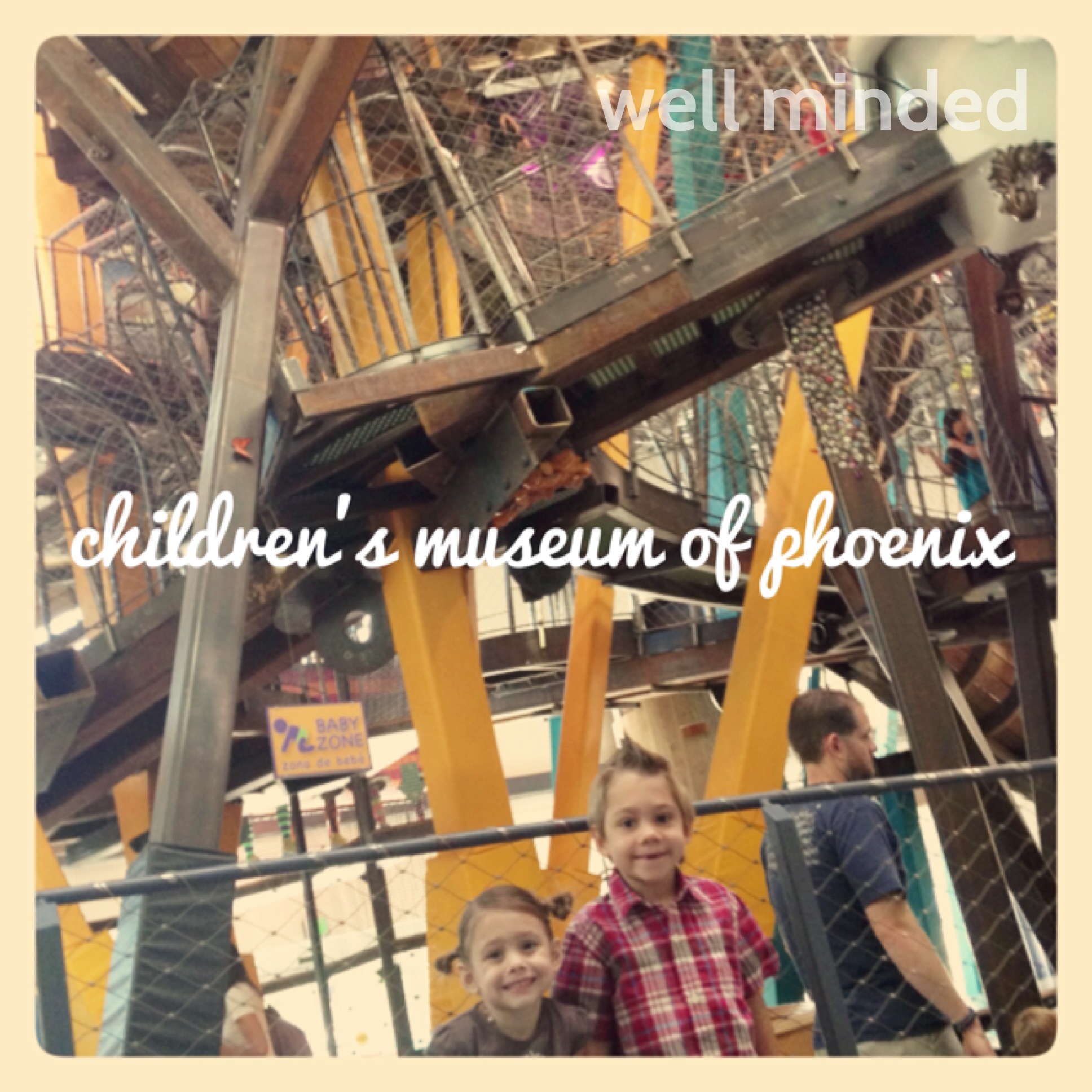
The littles and I were eagerly anticipating our recent visit to The Children's Museum of Phoenix because May is Companion Animal Month (sponsored by Banfield Pet Hospital) at the museum. Since we're all animal lovers and we love the museum, it couldn't get much better! Of course, we first had to dive into...er...climb into the Schuff-Perini Climber, quite possibly the coolest climbing apparatus ever created. The littles spent about 30 minutes exploring and trying to lose and find each other. I went up, too. Unlike the bacteria-laden hamster maze passed off as a play place by the dining establishment with the golden arches, this climber is clean and most spaces are large enough for adults, who are encouraged to climb with their little ones.

IMG_6243

The littles really enjoyed the pet-themed art projects in the art studio.

20130529-001349.jpg

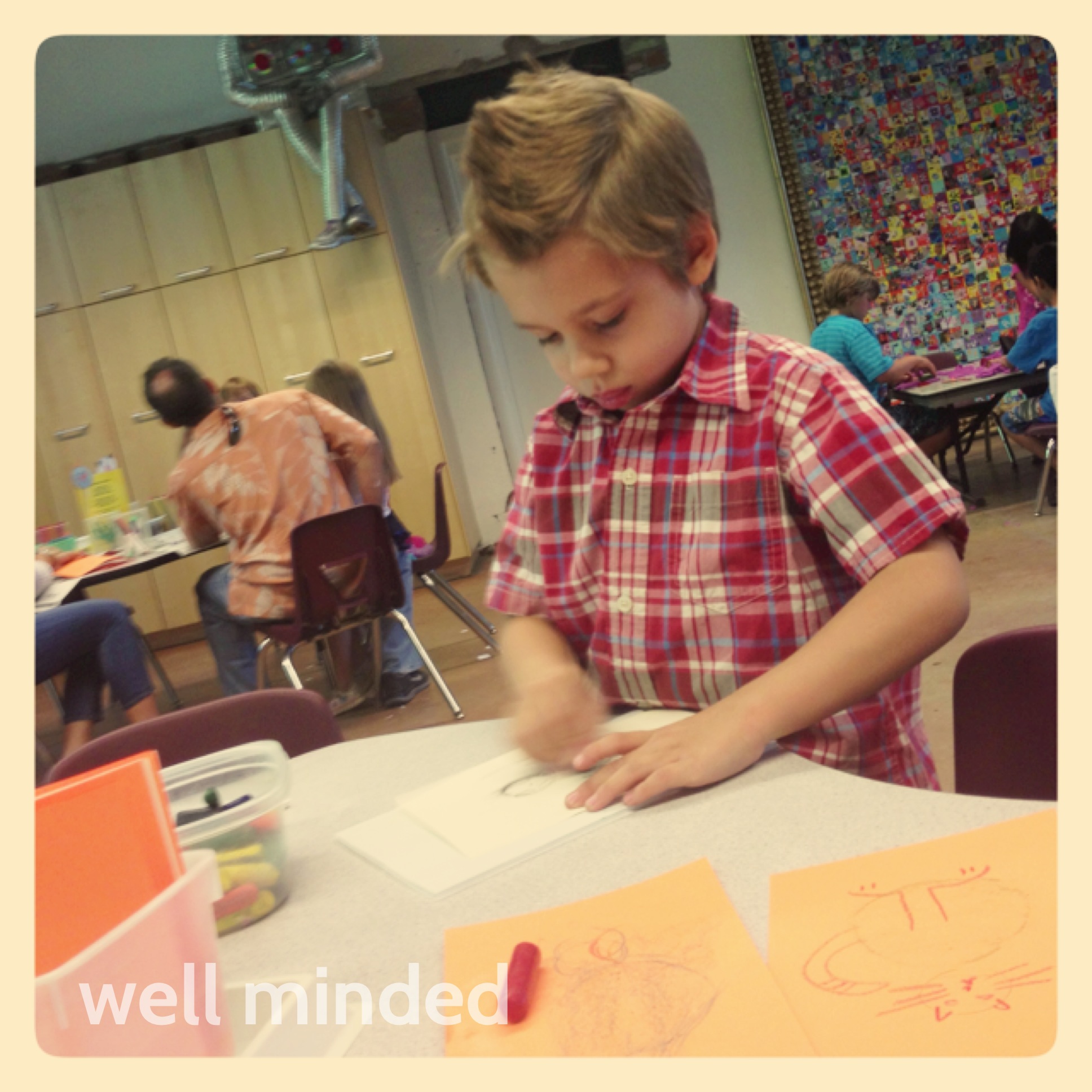
They started by creating "Pet Crayon Rubbings," which Porter really took to. The museum provided all necessary supplies and instructions. It was pretty amazing how many different animals could be made with the simple rubbing outline.

IMG_6259

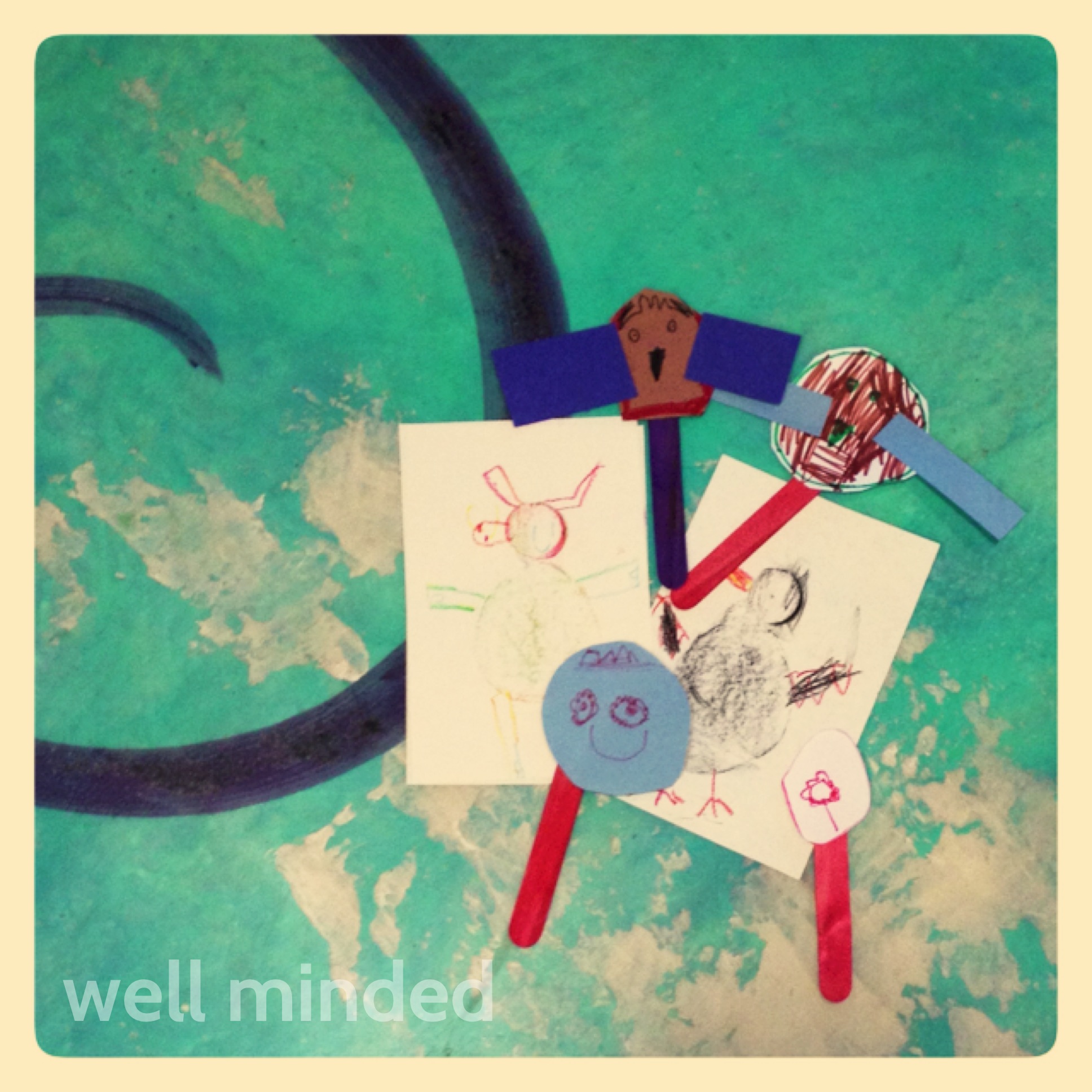
Next, they moved on to make "Pet Stick Puppets," which was a lot of fun. They traced from templates, added details with markers and cut paper, and then glued their creature onto craft sticks. They did a show in the puppet theater with their finished products right there in the art studio.

We came away with some really special handmade treasures.

IMG_6262

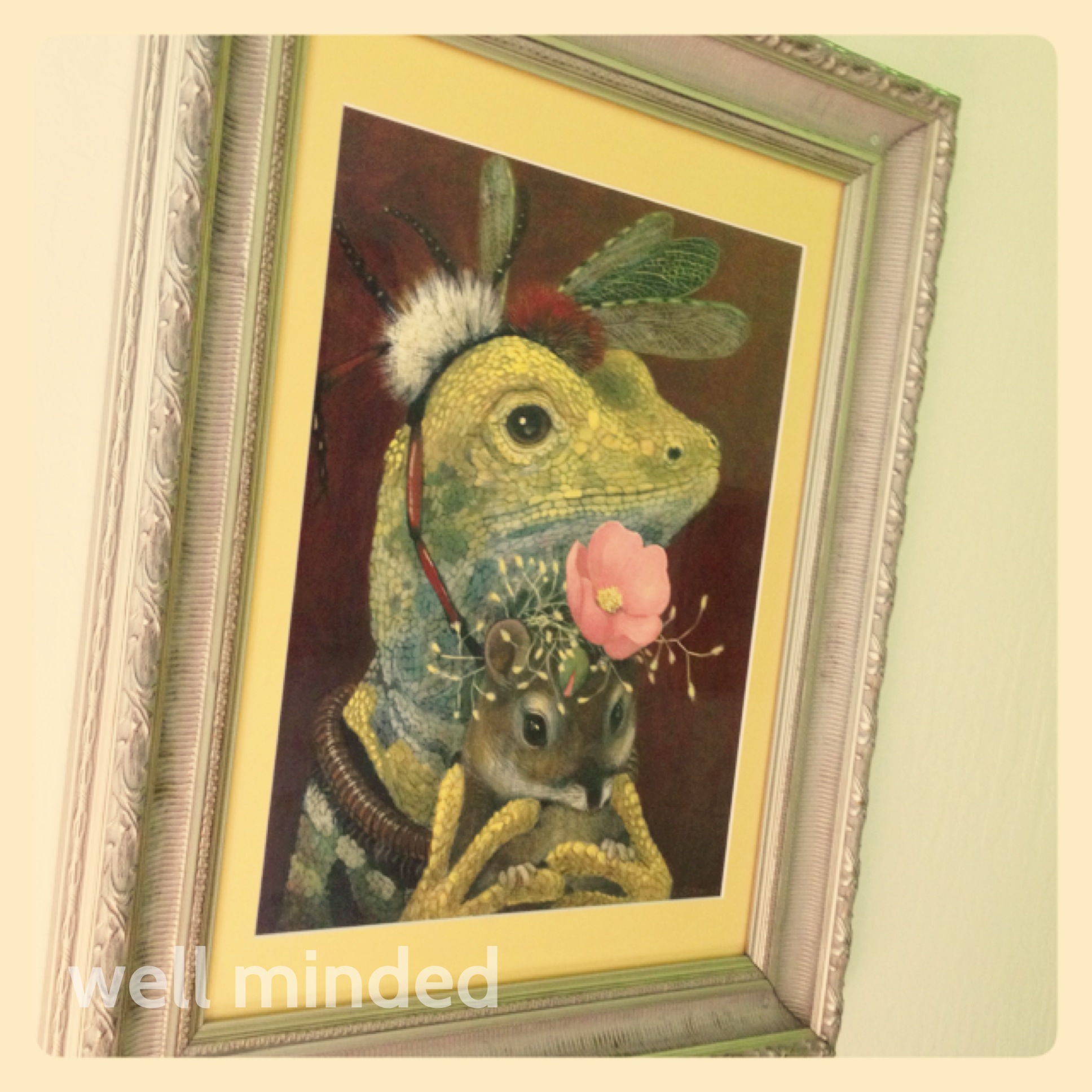
We set off to explore the museum some more, and in addition to the amazing regular exhibits, we discovered that the hallway leading to the reading nook was full of whimsical animal art by Carolyn Schmitz.

IMG_6257

The paintings were hung low enough for the children to view comfortably, and my littles had a ball just spotting the different animals and intricate details in each painting. The juxtaposition of classic realism with a child-like subject matter would please art-goers of any age.

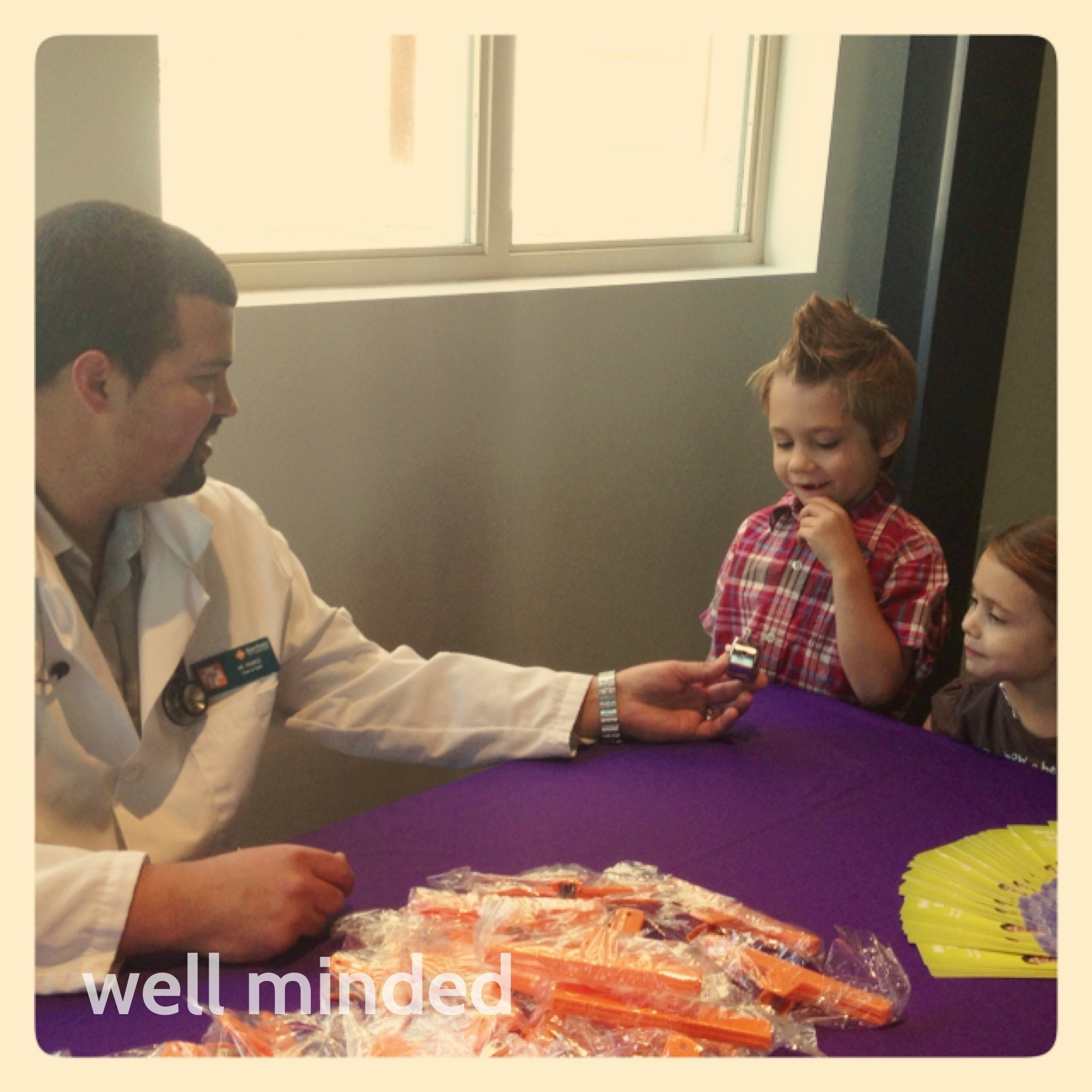
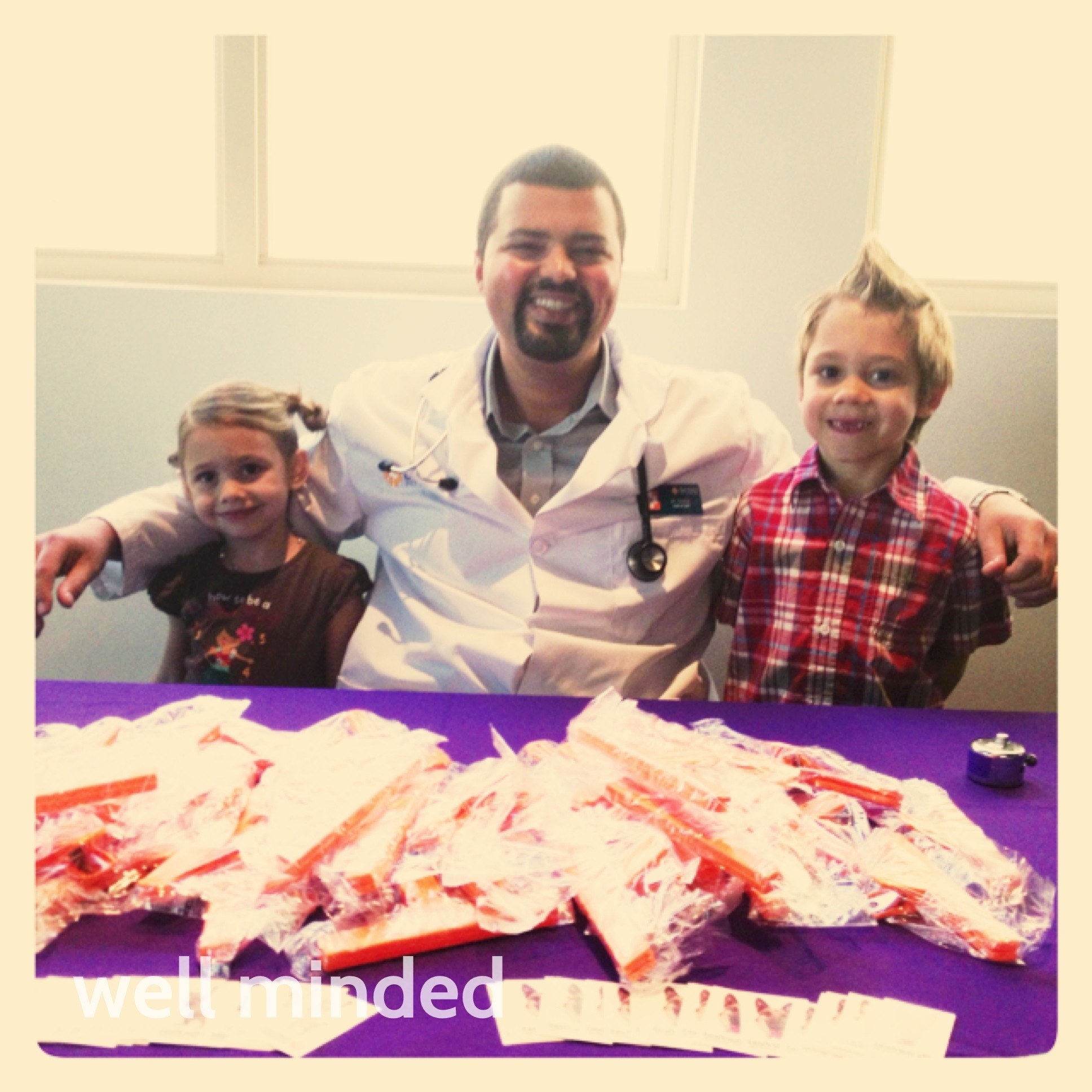
The highlight of our visit to the Children's Museum of Phoenix's Companion Animal Month was the "Ask the Vet" session. Banfield Veterinarian and Chief of Staff at the Tempe Marketplace office, Dr. Ryan Pearce, was on hand to chat with children and answer questions about pets and veterinary medicine.

20130529-001226.jpg

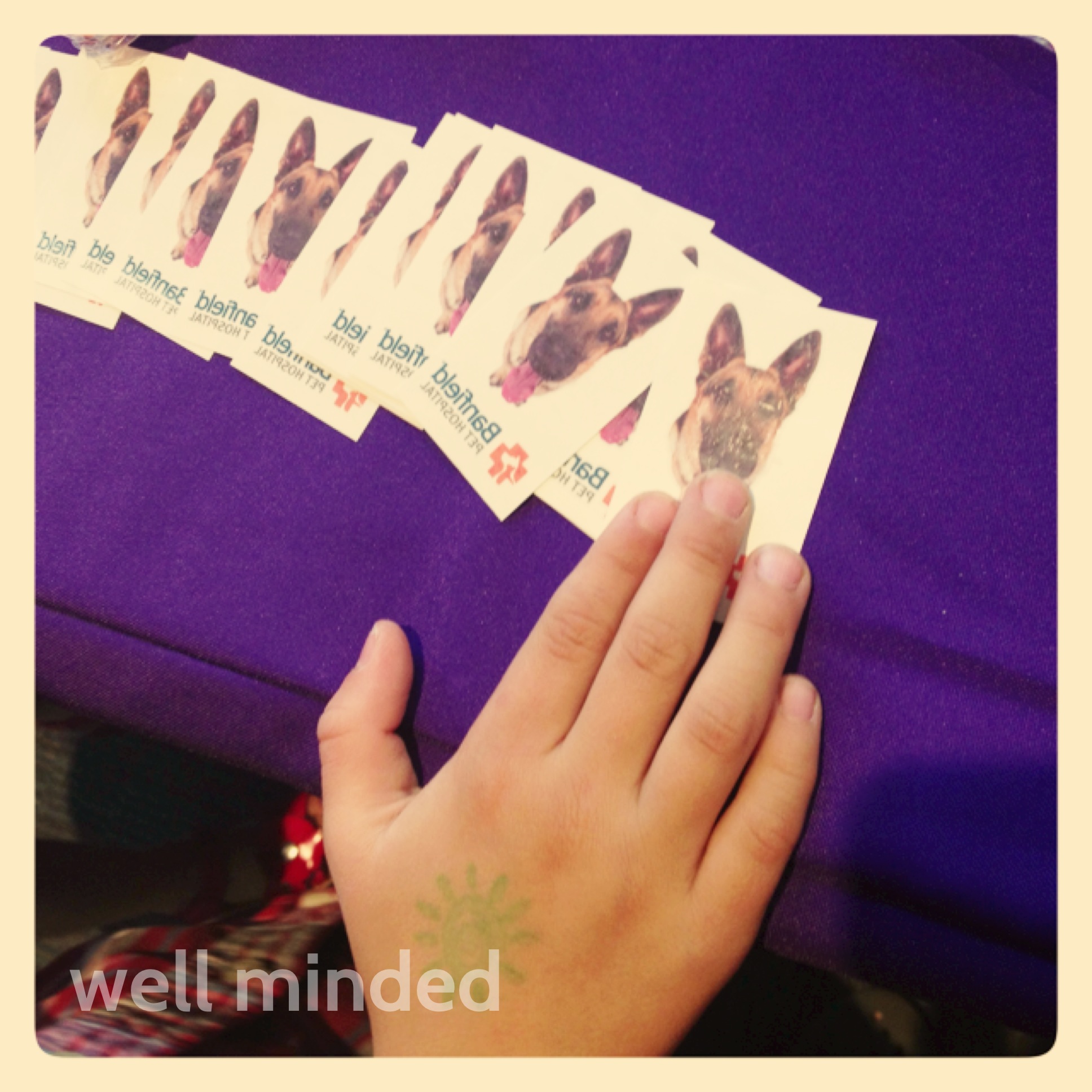
Dr. Pearce was knowledgeable and great with kids. Not to mention, he brought tattoos and other giveaways so he was "in."

IMG_6245

The kids asked about what kind of animals Banfield and Dr. Pearce take care of and learned that they see mostly cats and dogs, but also snakes, lizards, mice, birds, rabbits, hamsters, and other companion animals.

Porter asked, "How does it make you feel when you save an animal's life?"

Dr. Pearce got a big smile on his face and said, "it's really rewarding because we get to see the pets happy and healthy, and especially make the pet's parents happy because they are usually really worried and scared when something happens to their pet. It makes me feel really good to help someone, you know? You should take every opportunity to help someone when you can. It makes you feel really good–sometimes better than the person you helped."

What a great message.

20130529-001104.jpg

Dr. Pearce and the staff at the Children's Museum of Phoenix also told us about their "Future Vet Camp" program held once every three months for one day. The program, geared for children of elementary school age is a "career discovery program that teaches children about veterinary medicine." Future vets get to interact and learn about procedures from a veterinarian and a therapy dog, and they even earn a stethoscope upon "graduation." I think I know two future vets.

In June, SRP is sponsoring "Safety Month," and the museum has some really fun activities planned, including programming on bike safety and safety around water and electricity.

The museum is celebrating its 5th Birthday with a "Big Birthday Bash" on Friday, June 14th. Marion Wiener, Director of Marketing & Communications, informed me that "general admission gets you all that you love about the more than 300 hands-on, learning experiences at the museum, plus face painting, magic, balloons, birthday crafts, cupcakes, giveaways, and more!"

Our Companion Animal Month experience at the Children's Museum of Phoenix was educational and lots of fun, and I didn't even touch on the regular exhibits, which make up the majority of the museum. It's a place worth coming back to again and again to discover new things, and even the old things become new experiences as the children grow and rediscover.

Disclaimer: I was provided admission to the museum in exchange for my honest opinion.
the big, bad world: enter, ThunderShirt, part 1 (Rex)

There's a lot to be afraid of in this world. I have heard amazing things about the ThunderShirt. Though I'm thankful my dog does not suffer from anxiety issues, I really wanted to find out what all the buzz is about. The product line has expanded since the company's inception, but their flagship product is the ThunderShirt for dogs, which, according to thundershirt.com,

uses gentle hugging to calm your dog or cat. With its patented design, ThunderShirt’s gentle, constant pressure has a dramatic calming effect for most dogs and cats if they are anxious, fearful or overexcited. Based on surveys completed by over two thousand customers, over 80% of dogs and cats show significant improvement in symptoms when using ThunderShirt. ThunderShirt is already helping hundreds of thousands of dogs and cats around the world and is recommended by thousands of veterinarians and trainers. How does ThunderShirt work? Experts believe that pressure has a calming effect on the nervous system, possibly by releasing a calming hormone like endorphins. Using pressure to relieve anxiety in people and animals has been a common practice for years.

Could it be true? I asked around, and one of my clients, Leah, was happy to sing ThunderShirt's praises. She rescued her pooch, Rex, from a year of neglect, where he had very little contact with people, and no contact with other animals. Since it was the first year of his life, she had to start over with him. "While he is very intelligent," she explained, "the world doesn't quite make sense to him." Leah helped Rex become happier and healthier, but there were still things that scared him and caused him stress. She sought the help of a behaviorist who taught Rex coping techniques that he used–and still uses–to his benefit. The techniques helped Rex work through the stress, but the stress, itself, was still there. Leah decided to try the ThunderShirt to minimize Rex's stress. She admits that she was skeptical, but was familiar with the use of pressure vests for people with autism, so she was willing to give it a try. She started by putting it on Rex for brief periods absent of stress, and by the second or third time she put it on him (calling it his "shirt" each time), he was comfortable with it. Soon after, a large monsoon–a major stressor for Rex–rolled through. Leah noticed Rex beginning to get anxious, so she asked him if he wanted to wear his "shirt." He gave her his "yes" response. Leah explained,

He calmed down long enough for me to slip the ThunderShirt onto him...it didn't seem to be helping. However, when I asked him if he wanted me to take off his 'shirt' and started to take it off, he gave me his 'no' response...After the storm had passed, he positioned himself as he had when I put the vest on him, clearly ready for it to be removed, so I asked him if he wanted me to take his 'shirt' off, and got a 'yes.'

As monsoon season goes here in the Phoenix area, she soon experienced a similar situation with Rex. She saw even more improvement when using the ThunderShirt.

The third monsoon of the season approached, and, this time, Rex recognized the benefit of the ThunderShirt, himself. He found his "shirt" and brought it to Leah, asking her for help. Leah reported that it didn't calm him 100%, but she saw definite improvement.

She started putting the ThunderShirt on Rex whenever there was a stress trigger. He really liked wearing his "shirt" at these times, as tightly as Leah could get it. She reported that if it wasn't tight enough, "he would stay put, waiting for me to fix it." Smart guy!

Then New Year's Eve rolled around. Leah recalled,

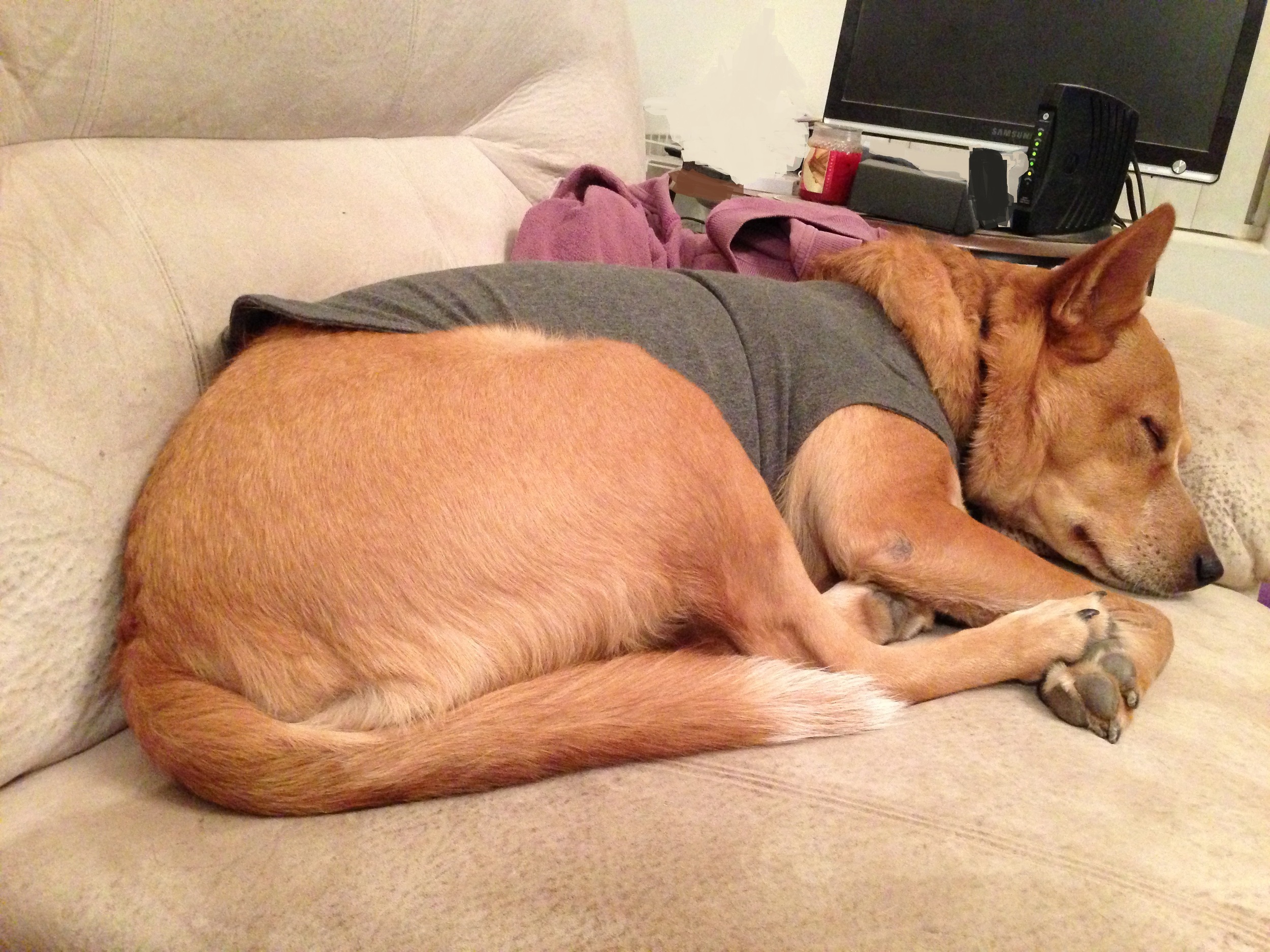
Fireworks are one of the things that stress him out, and between the various local fireworks (shows) and neighbors with fireworks, there were BOOMS galore. At first, I had forgotten to put his ThunderShirt on him, and he was very stressed. He was running laps of stress through the house, barking and generally agitated. Once I remembered...I asked him if he wanted his 'shirt' and got a 'yes!' So I grabbed his ThunderShirt and put it on him. He gave me a big kiss and laid down on the sofa next to me, and within a few minutes, he was enjoying a nice calm nap, as the fireworks continued.

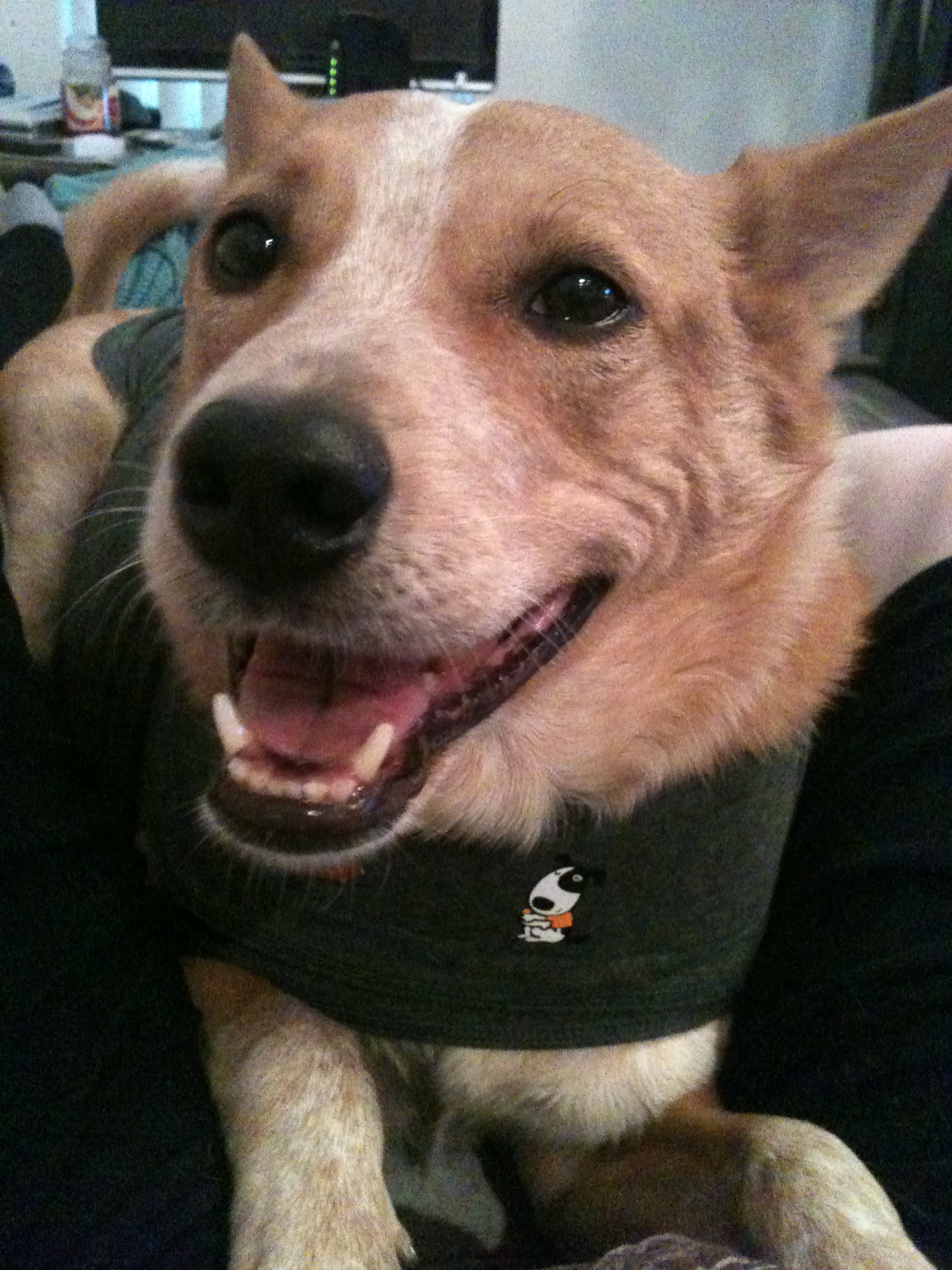
Rex relaxing in his Thundershirt as New Year's Eve fireworks explode. (Client-submitted photo.)

Rex continues to have success with his Thundershirt. After hearing his story and others, I decided I wanted to see for myself. Stay tuned.

Smarty-pants cutie-pie Rex and his BFF, the Thundershirt. (Client-submitted photo.)

Disclaimer: I received a complimentary ThunderShirt in exchange for my honest opinion.