Finding Rover: the new app that changes the game for lost dogs

Facial recognition software has played a key role in solving some of the most publicized and critical criminal cases, including the Boston Marathon bombing case that shocked us so recently. Last Tuesday, this technology was released to dog lovers the world over in the form of a free mobile app, Finding Rover. According to a press release out of San Francisco,

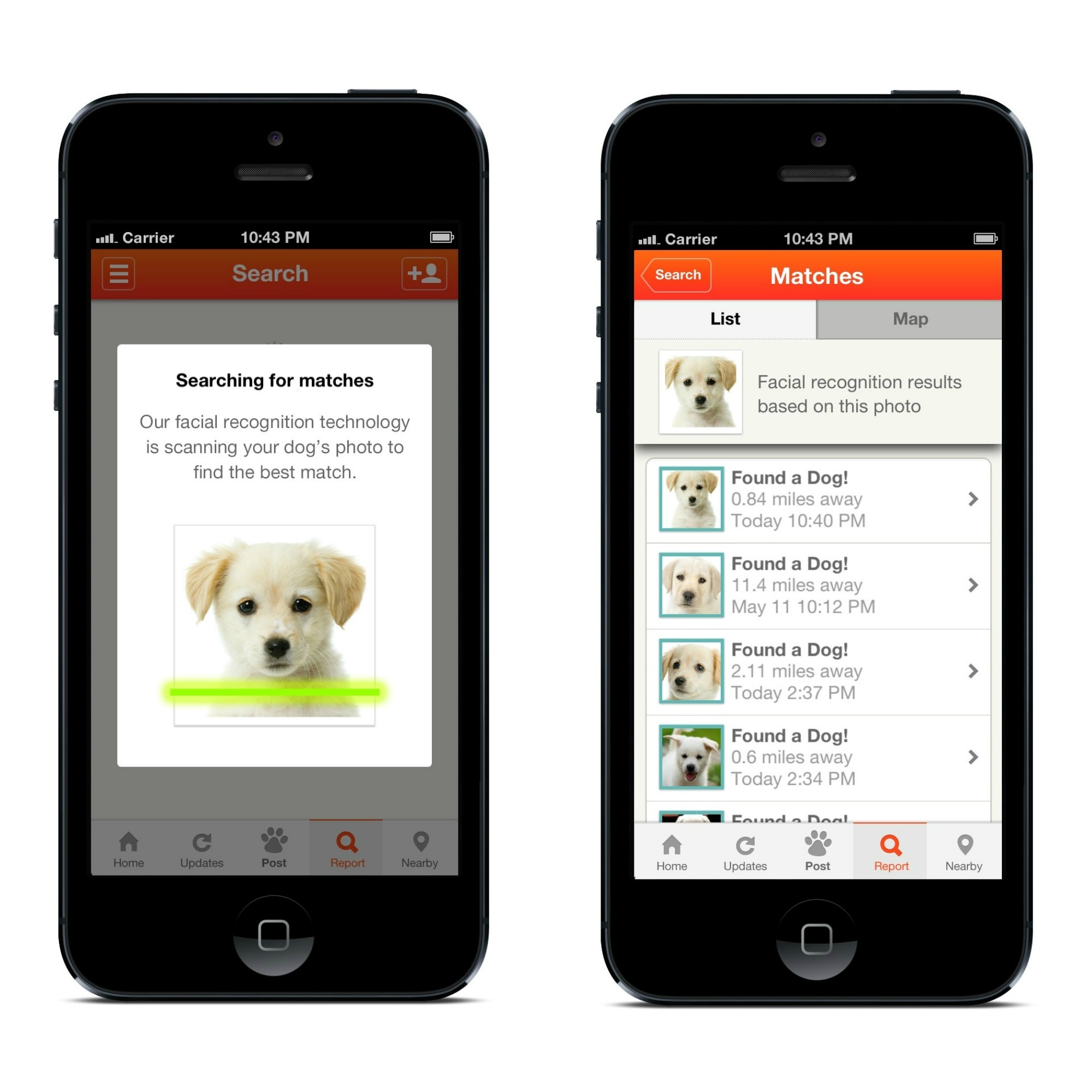
More than 10 million pets go missing each year, according to the Humane Society of the United States. Finding Rover's state-of-the-art facial recognition technology helps reunite more dogs with their owners by enabling anyone to instantly identify a missing dog on the spot by taking a photo on a mobile device.

I spoke to CEO and founder of Finding Rover, John Polimeno, about Finding Rover and the adventure that was its creation. If I could use one word to describe Polimeno, it would be "infectious." His desire to save every dog is childlike, yet with the use of the most advanced technology available–newly developed just for his vision–will likely come close to getting the job done. "It was a dream I committed myself to," he beamed. And now it's happening.

WM: I can't even tell you how excited I am about this app. As soon as I heard about it, it was downloaded on my iPhone, and I created a profile for my dog. It is amazing, and is really going to change things for lost pets and their families.

Polimeno: I'm really excited too! The app was released on Tuesday at 5 p.m., and we had over 2000 downloads within 24 hours.

WM: That's fantastic. How did you get the idea for Finding Rover?

Polimeno: Well, my wife, Kristie, and I were sitting at a coffee shop.

(I couldn't help but think, "of course...isn't that how all genius ideas begin?")

Polimeno: We saw a lost dog poster, and we remembered the trauma of losing our own dog. How we drove the kids around and how awful it was. A dog is a beloved family member, and if it goes missing, it can be devastating to everyone involved. We thought that there has to be a better way.

WM: Had you ever created an app before?

Polimeno: (chuckling) No. I was in the construction business, and I was going to retire.

WM: So how did you develop Finding Rover? How long did it take?
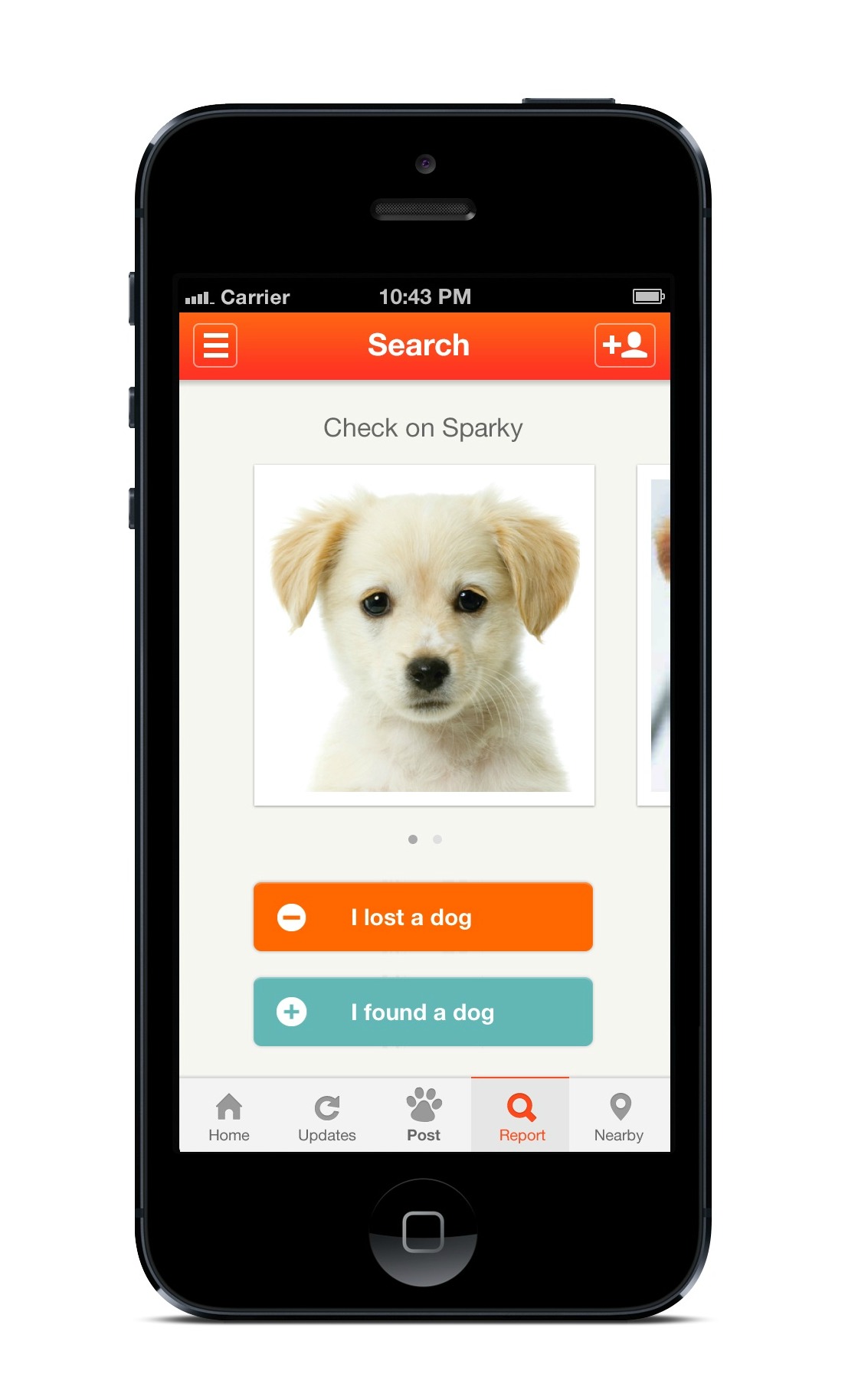
Photo courtesy of Finding Rover.

Polimeno: It took three years to develop. I started by taking the idea to five different facial recognition technology companies around the world. They all said 'no, we do people.' So then I took it to universities. At last, University of Utah's Software Development Center said 'we do people. It would be really hard to do. But we'll give it a try, if you'll fund the research.' So I funded a year of research. The technology is based on facial recognition software, but was created to work specifically for dogs, and specifically for this app. You can put 100 German Shepherds in the group, and yours will pop up. The software is very complicated.

WM: Wow. To me, dog faces are much harder to distinguish between than human faces.

Polimeno: The software doesn't know it's a dog.

WM: When I downloaded the app, I noticed registration on Finding Rover is incredibly simple.

Polimeno: It's not intrusive. We wanted people to be able to register their dogs and not have to enter in a bunch of personal information. Only when you lose your dog are you asked for your phone number, just so people can contact you. The app is clean, and we want to keep it that way.

WM: This must have been an expensive venture, but the app is free. Will you eventually charge for it so you can recoup your costs?

Polimeno: No. Never. The app will always be free. I haven't figured out how to recoup costs, and I'm not even thinking about that right now. I just want to help people find their dogs. Maybe there will be sponsorships or something in the future, but right now, the goal is to get 50 million dogs registered. It was just released Tuesday, and people are already finding their dogs. That's so cool.

WM: That is cool.
Photos courtesy of Finding Rover.

Polimeno: I want anyone in the world to be able to use it, so it will always be free. Currently, the app is available on iPhone, but there are plans to release an app for Android this year. People who aren't smart-phone savvy will be able to register on the Web site. It's all about your dog, and it's about bringing people together to help each other.

WM: What if I haven't downloaded Finding Rover, yet, and my dog is lost. Is there anything I can do?

Polimeno: Yes, you can upload a photo that exists in your photo library. Even if the photo isn't suitable for facial recognition, you can still post any picture of your lost dog for others to view.

He went on to explain that even if you don't have a dog, you should still have the app. People often hesitate to pick up dogs because they think they might get stuck with them. If you can find the owner on Finding Rover, it makes it convenient to do a good deed. And it goes beyond the individual. Shelters and vets can also use Finding Rover to quickly reunite owners with their lost pets.

WM: So, would you recommend Finding Rover over microchipping?

Polimeno: No, no. Pet owners should do everything they can. Finding Rover is free, and there is a cost with microchipping. That might make a difference to some people. Our goal is to rescue every lost dog.

WM: This is awesome. You have such a fantastic energy.

Polimeno: Well, it's positive! It's all about dogs and helping people.

It is positive. And we need positive in this world right now.

Polimeno is genuine. He is so excited to help people find their dogs, he can hardly contain himself.
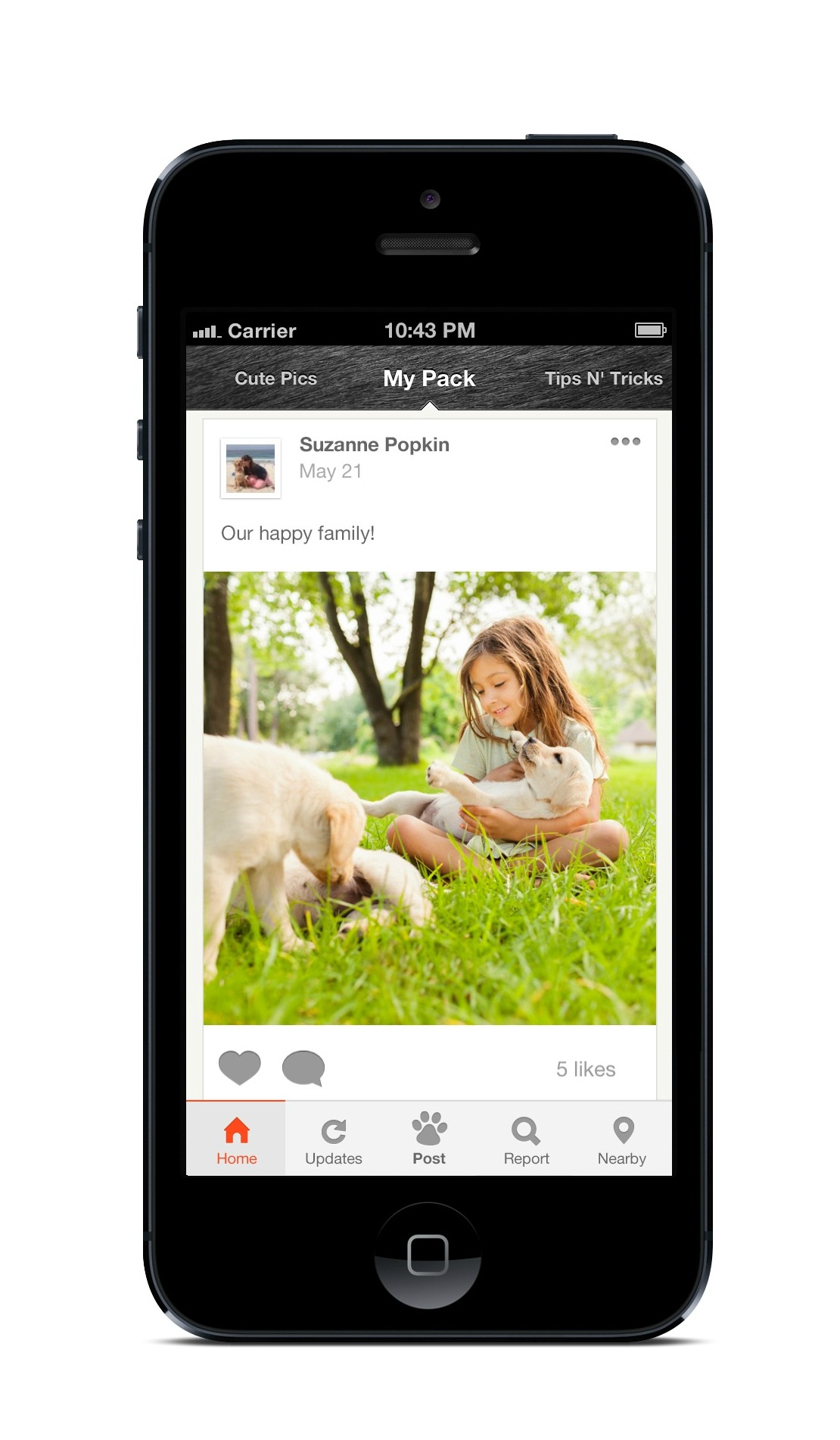
Photo courtesy of Finding Rover.

Finding Rover also has some fun features. You can create and/or join a "pack," a group of dog owners who have something in common. If the shelter from which you adopted your dog has a pack, you can connect with other pet owners who have adopted a dog from the same shelter. Or perhaps your neighborhood or office could have a pack. The app also offers a "tips & tricks" tab, where you can ask and answer canine-related questions. There's even a place to just post cute photos of your dog. Social media for dog owners. What more do we need? Polimeno explained,

people are turning to niche social media platforms, such as Finding Rover, as a way to communicate with people with similar interests. Finding Rover is for anyone who cares about dogs and wants to make sure they find their way back home, regardless of if they own a dog or not. Our goal is to be an essential part of dog lovers' day-to-day routine that they can rely on in the event of a missing dog.

My experience with the app has been great. It is easy to register your dog, and Finding Rover even takes the difficulty out of getting that perfect face-front shot. You just align your dog's eyes with a line on the screen, and if you can't get your dog to look, just hit the "bark" button, equipped with two sounds sure to get your dog's attention. Snap! It's that easy.

I believe that Finding Rover will change the face of the lost-dog problem. And with John Polimeno at the helm, it can't lose. Download Finding Rover now, and join the community. Share this exciting news with your friends so there are no more lost dogs.
DOGTV is happening

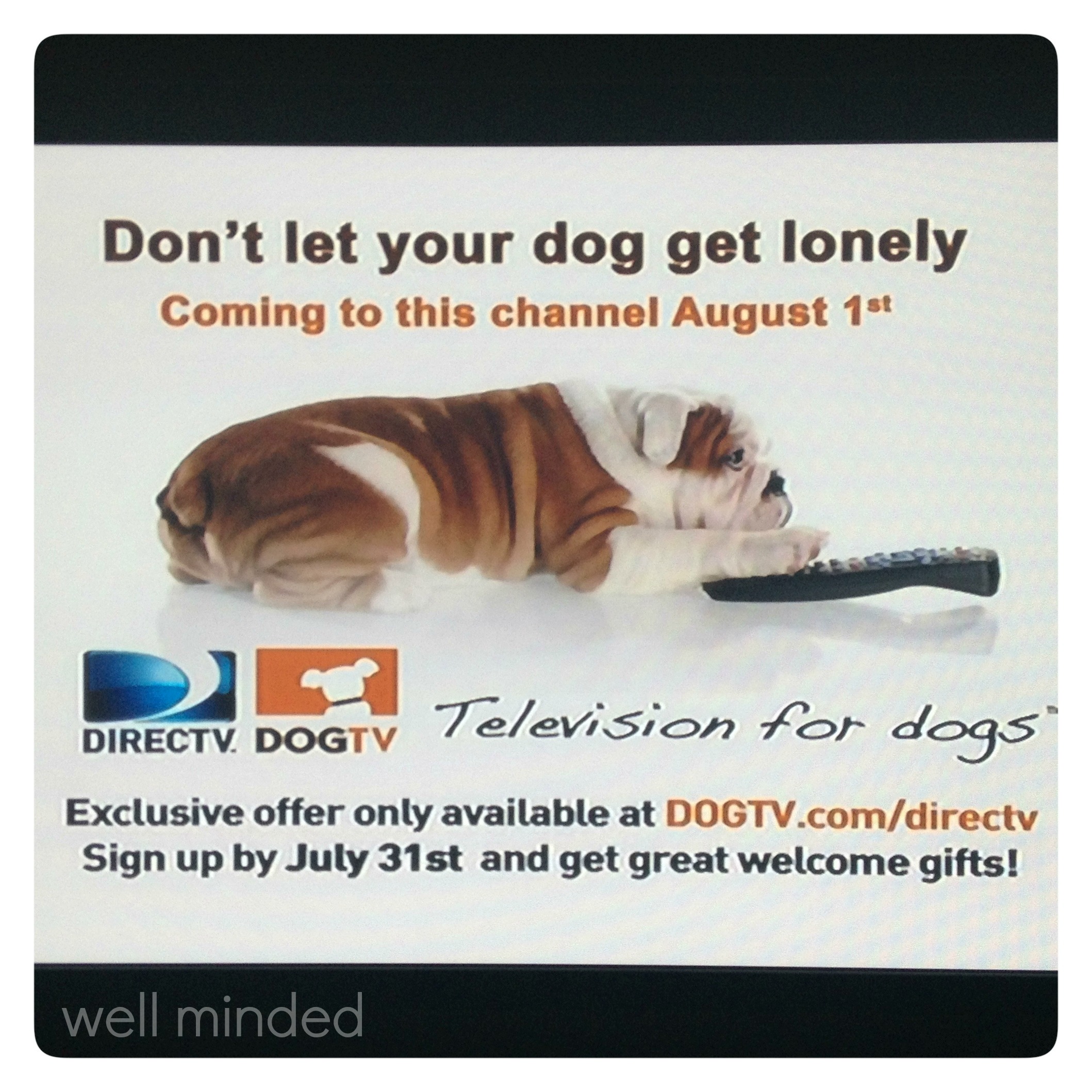
Late last night, I noticed "DOGTV" in my DirecTV channel lineup, so of course I had to check it out. Up popped this screen: Image

I'd heard rumors about it, but now it looks like it's really happening. So I went to the Web page, and found that the promo includes one month of free DOGTV and various dog-related coupons. After that, your pooch will pay $4.99 a month for his own TV channel.

I couldn't find any programming info.

Some people find that leaving a TV or radio on for their animals while they are away helps sooth and calm them, especially if they are sensitive to noise and alerted if a butterfly passes gas within 20 yards of the front door. That totally makes sense, though I'm not sure running your TV all day while you're at work is the best remedy.

If you're considering adding DOGTV to your DirecTV package, preview it with your pooch before leaving him alone with the remote. If the mid-day soap opera marathon includes dogs yowling, it might be more agitating then soothing. Images of dogs running around ape-shit at the park might be entertaining if you're watching with your pooch, but if Fido is tearing around your living room unsupervised for eight hours while you're at work in response to the latest episode of Dog Park Raiders, who knows what you'll come home to. Perhaps there should be parental controls.

So, just as we all watch every single cartoon with our kids as we're told to (right? don't we?), we should watch every single show with our poochies. With all the cartoons I'm watching, I'm not sure I'll have time for this.

It might be worth checking out, though. $4.99 could be a steal, if it rocks your dog's world. Heck, it might rock your world, too, you crazy dog person.

professional pet sitter pet peeve: grimy bowls

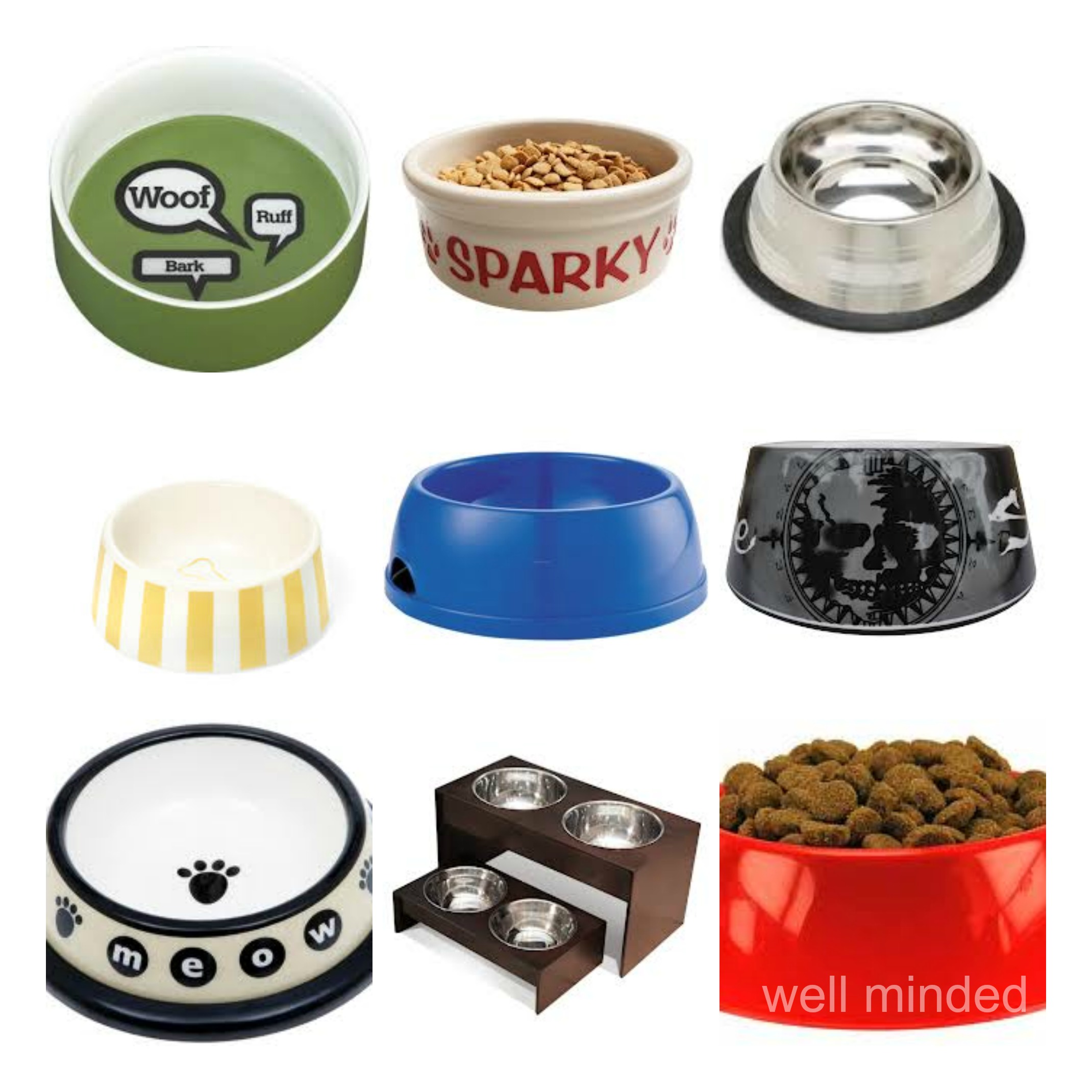
Image As a professional pet sitter, I see lots of pet bowls, typically that of the dog and cat variety. I fill them with food as directed, and I fill them with water. In addition to those standard services, I offer something unique: I clean the bowls.

Why is that special? Because you don't.

Well, I don't mean you, of course. I mean my other clients. You, reading this, are the perfect client.

Truth be told, however scandalous, 95% of my clients (and it can't just be my clients) don't clean their pet's bowls. How do I know? They're grimy! Like, really, disgustingly grimy. I'm so familiar with this, that I know the stages of grime buildup:

Stage 1: slime. Not visible to the naked eye, but when the bowl is given a light rinse, the slick stuff is activated, and you can feel it with your fingers. This stage happens within 24-hours of a cleaning.

Stage 2: light grime. Not visible to the naked eye. Feels slimy when mixed with water, but sticks to the inside of the bowl, so using a scrubber makes it easier to remove. Develops after approximately 72 hours.

Stage 3: grime. Usually visible, unless you have a fancy-patterned bowl. Does not require water to feel. Feels tacky. Requires the use of a scrubber to remove. Will develop after 7-14 days.

Stage 4: advanced grime. If you can't see this, you're either visually impaired (in which case you should use your sense of touch for detection) or in a deep state of denial (in which case you should see a therapist). This stuff requires a pot scraper to get off. Develops after about 3-4 weeks.

Stage 5: toxic takeover. Really? How did you let it get this bad? There is no hope. You need a new bowl. Yesterday. Have you played with your pet this season?

Now that you know how to recognize the signs and stages of a grimy pet bowl, let the excuses begin:

It doesn't look grimy. Look closer. Feel it with your fingers.

• My pet doesn't care. Some pets are more particular than others. Cats sometimes won't drink out of a slimy bowl. If your pet has stopped eating or drinking, try cleaning the bowl (and see the vet, as well). Even if your pet doesn't care, there is bacteria growing in that grime that can make them sick. Then you'll both care.

It's only a cat. It's not like he drools like a St. Bernard. Point taken. Your cat's grime is neater than the rest. And his poop don't stink.

I have a housekeeper. Cleaning the pet bowls must be part of that service. It's not.

• My spouse cleans the bowl. He doesn't.

• My pet cleans the bowl when she eats/drinks. It's spotless! I usually clean my plate, too. Does that mean I should throw it back in the cabinet when I'm done?

Now that you're out of excuses, how do you get help? Well, here are a few suggestions:

• Instead of leaving your pet bowl on the floor and dumping food from a scoop or water from a pitcher, pick the thing up so you can get a closer look. Feel the grime, and take the bowl to the sink to wash before refilling it. Do this every time you fill your pet's bowl. Just a bit of soap and a scrub-scrub-rinse will do the trick. Do not clean the bowl with toxic household cleaners, such as bleach.

• Purchase a dishwasher-safe bowl and throw the bowl in the dishwasher every few days.

• If your pet is a free-feeder and you feel that you can't leave your pet without a bowl of food on the floor for two minutes, purchase a second set of bowls to provide relief to the first set.

If all else fails, just make sure you use my services more than once every six months. I can tell that bowl hasn't been cleaned since the last time I was there.

animals who reduce, reuse, and recycle: Jeremy Jackrabbit takes over Phoenix

Now that kids know how to use a touch screen by three months of age, you might think puppet shows old fashioned. Retro, at best. The littles have been enjoying the Phoenix Public Library Summer Program, and yesterday's event was a puppet show put on by the Great Arizona Puppet Theater. To be honest, I wasn't too excited about it, so I planned to read during the performance. And...the littles debated about whether or not to go. A puppet show? Off we went, despite our reservations. Po's book. And some dried play-doh I neglected to collect.

I was pleasantly surprised to see that the puppet show was "Jeremy Jackrabbit Recycles the Can," based on the Jeremy Jackrabbit book that Porter brought home from school a couple of weeks before summer's onset. He was super excited when he got to keep a copy of the book and rambled on and on about how the story was great and how the girl who illustrated it was just a kid, and she came to his class to read the book. I pretty much thought he had his story mixed up, but then I did a bit of research.

Jeremy Jackrabbit Recycles the Can was written by Sasha and Rodney Glassman of Phoenix and illustrated by student artists of Phoenix, all from local elementary schools. One of the illustrators was from Porter's school, so she did, indeed, read the book to the class. Duh, mommy. The authors sound pretty amazing, as noted on the back of the book:

Sasha and Rodney have a passion for education, helping children, and making their community a stronger and more sustainable place to live, work, and raise a family. With these goals in mind, their vision of writing children's books, illustrated by students, to educate future generations on issues of sustainability was born.

Jeremy Jackrabbit's adventures center around a lesson in reducing, reusing, and recycling. He meets lots of animal friends along the way, and together, they preach a message of sustainability that is fun for kids. The story is simple, yet the message is clear, and children really enjoy the peer-created illustrations, which I believe support an "I can do it" spirit.

IMG_7135

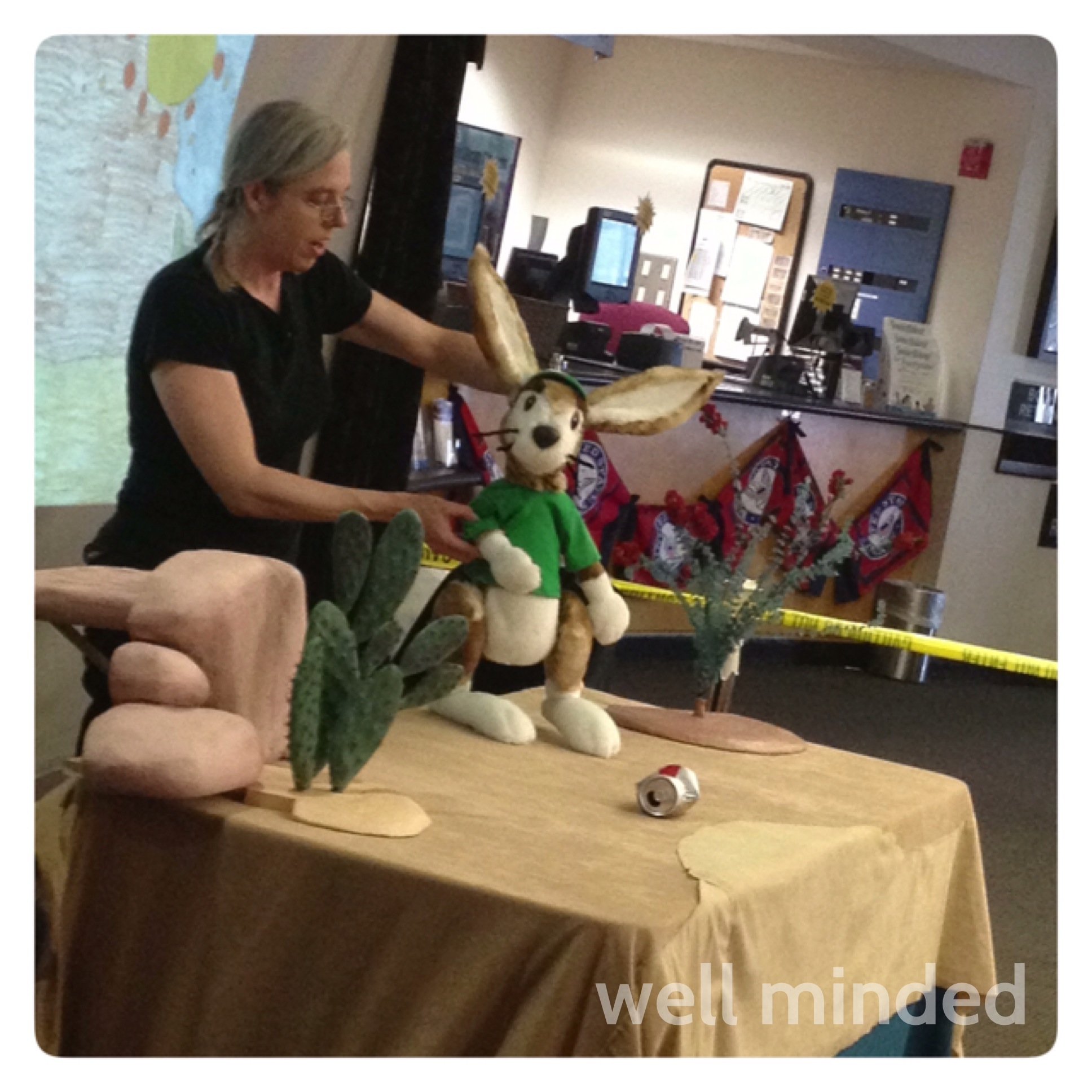
The Great Arizona Puppet Theater (Sasha Glassman serves on the board) has brought a current theme to the old fashioned puppet show, and the audience yesterday was delighted. Jeremy Jackrabbit and his friends interacted with the kids, and the crowd went wild. Heck, even I put down my book to take a quick, possibly unauthorized video of Mountain Lion Michael's song.

Michael's voice could be considered irritating by many, but the kids loved that shit. And I have to hand it to the puppeteer, who gave irritating voices to multiple characters simultaneously and singlehandedly. She was a true professional in her craft.

I must apologize for the odd angle of the video. As delightful as librarians can be, there is one who takes her job–puppet show security–quite seriously, as if expecting a mosh pit to erupt at any moment. I was able to capture this behind-the-scenes footage by hiding behind a pirate ship set so said librarian couldn't see me. Outlaw at the puppet show–that's me

[wpvideo LGsNiTFq]

In multiple formats, Jeremy Jackrabbit has hippity-hopped into our lives and is having a positive influence on the children in our community, preaching a valuable lesson in sustainability. He's captured our attention, and I love it! Now I wonder if the puppets are made of recycled materials...